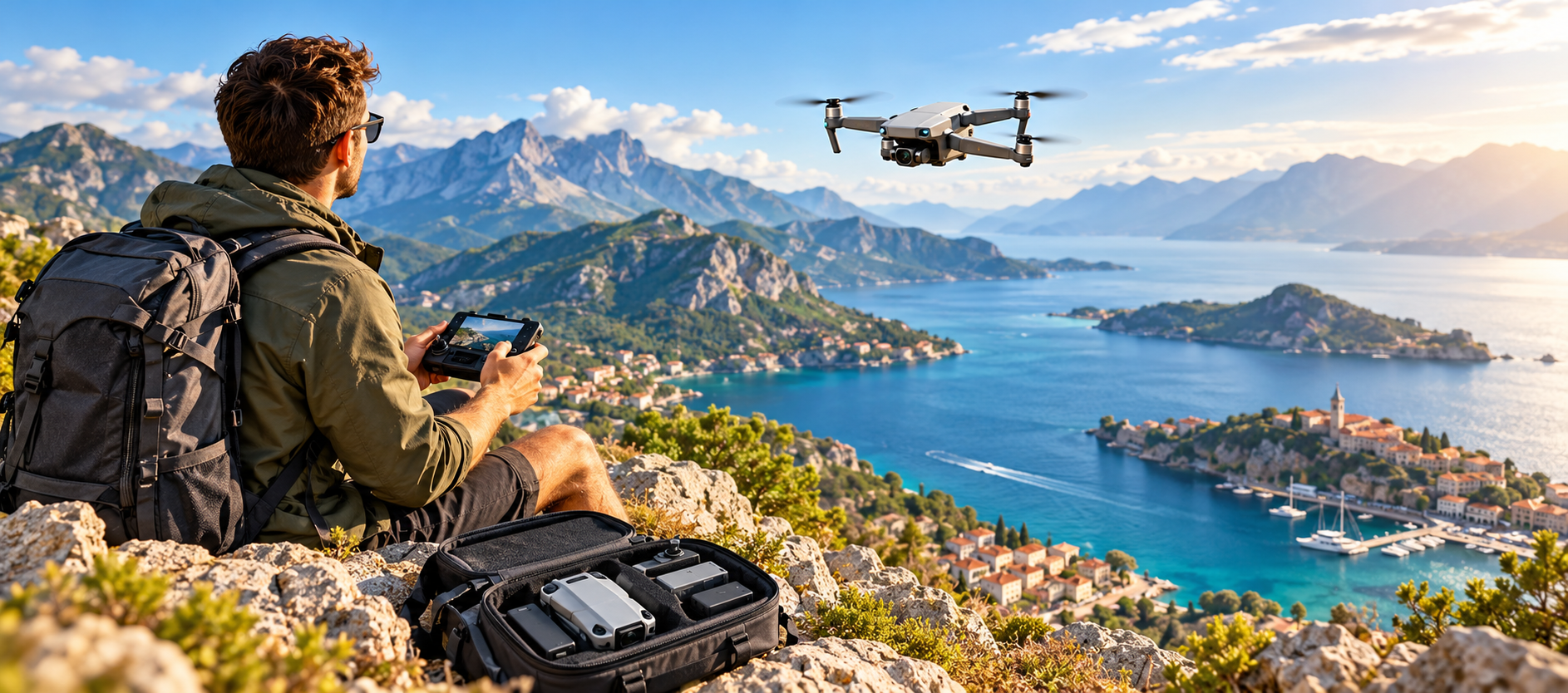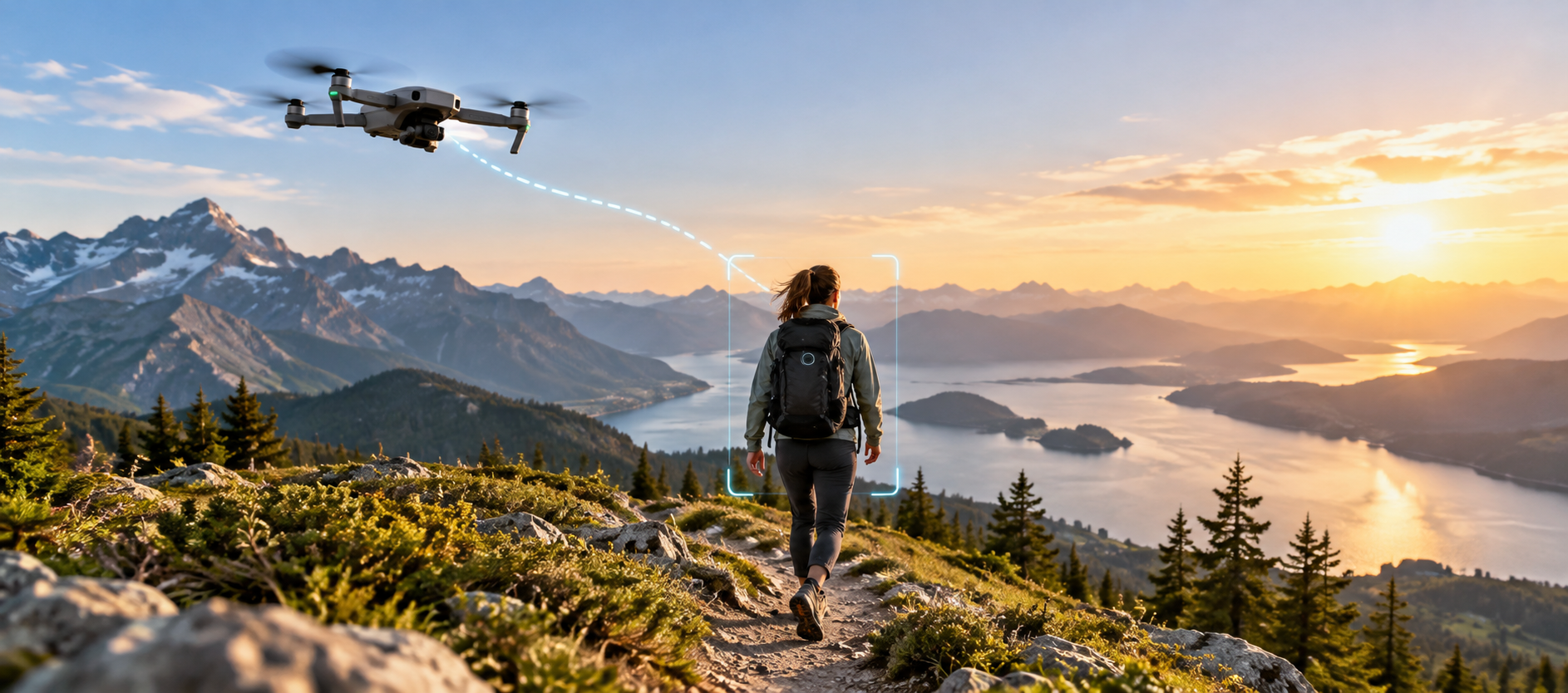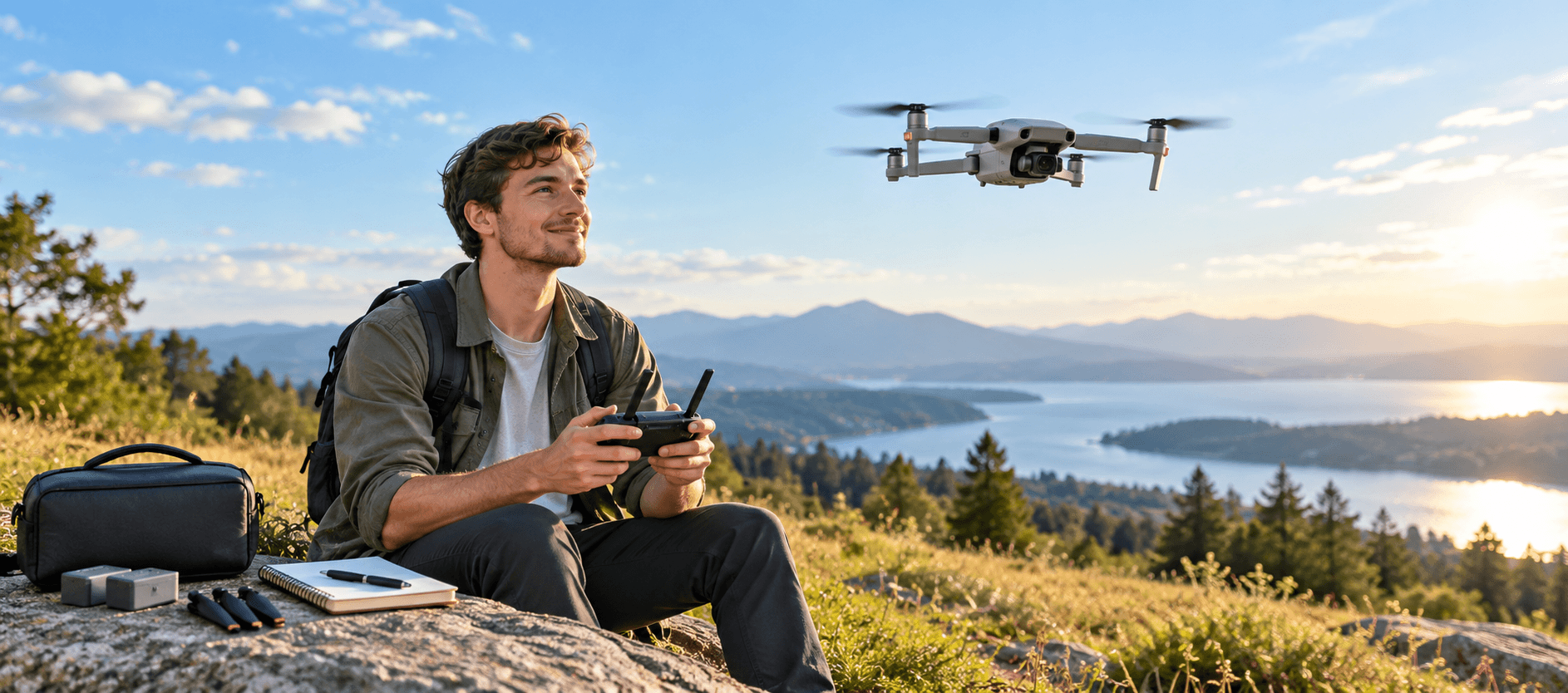
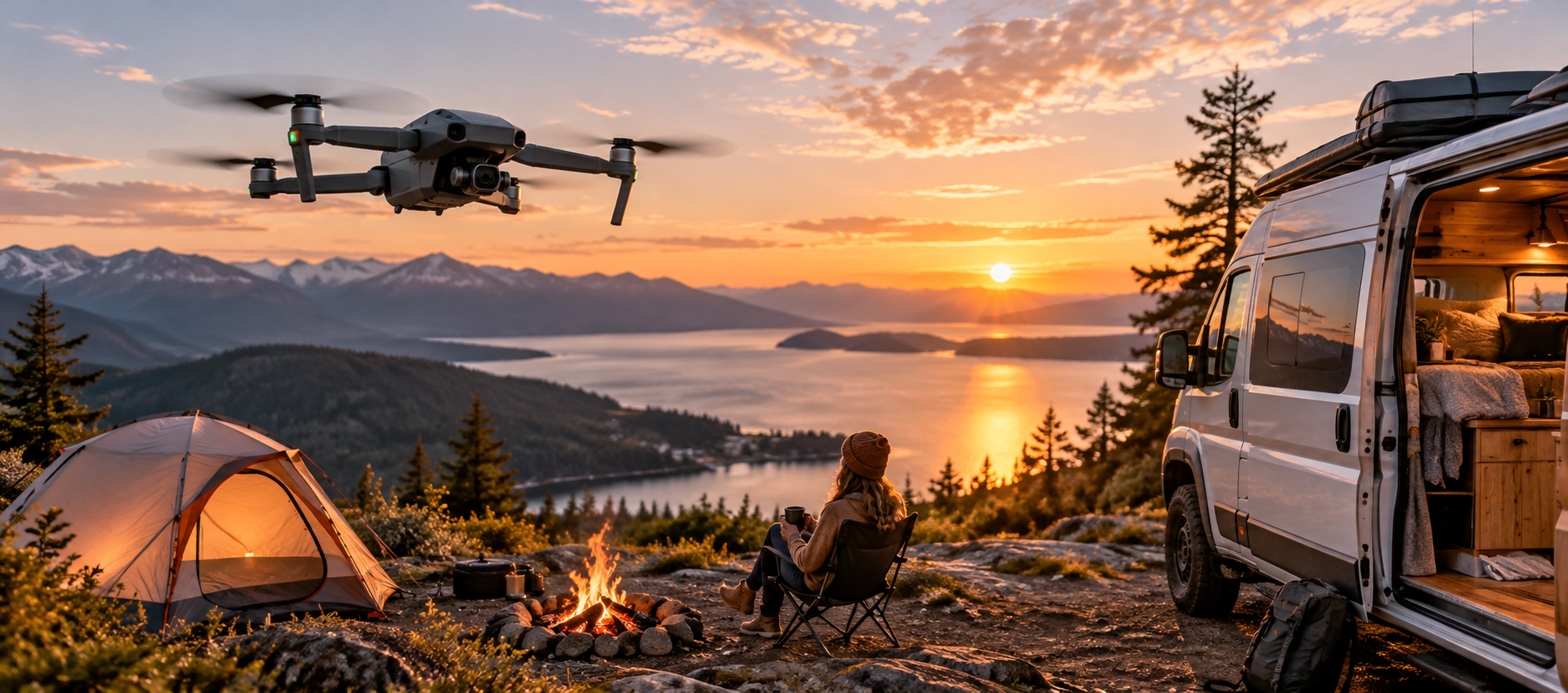
For many camping and van-life trips, a compact foldable camera drone offers a useful balance of portability and stabilized footage. An ultralight mini drone makes more sense when pack weight is the priority, while a selfie or follow-me drone suits solo creators filming themselves. These are category-level recommendations, not results from a controlled head-to-head test; the right choice depends on your packing space, filming needs, weather, and charging options.
A practical buying rule is to compare carried weight, stabilization, wind limits, battery availability, and charging compatibility before paying for extra features. A 3-axis mechanical gimbal can help produce smoother footage, but it is not a substitute for safe flying in wind. Check airspace, land-manager rules, and campground policies before every flight.
Best Drones for Camping and Van Life: Top Choices by Travel Style
For most campers and van-lifers, the best drone type depends more on packing space and filming style than on headline specs. A foldable camera drone is the most balanced option for scenic travel footage, while a mini drone is easier to carry on hikes and backpacking trips.
If your main goal is personal travel clips, selfie and follow-me drones can simplify filming. Budget-friendly camera drones are the best fit when you want stable footage without paying for advanced features you may not use often.
| Drone type | Best fit | Main strengths | Trade-offs to check |
| Foldable camera drone | General camping, road trips, scenic footage | Balanced portability; often offers stabilized camera footage | May cost more; check packed size, gimbal type, and stated wind limits |
| Ultralight mini drone | Backpacking and weight-sensitive trips | Small and easy to carry | Wind tolerance, camera stabilization, and battery options vary widely |
| Selfie / follow-me drone | Solo creators and hands-free action clips | Can simplify filming a person moving through an open area | Tracking can struggle around trees, cliffs, crowds, or poor contrast |
| Entry-level camera drone | Beginners and occasional use | Can cover basic aerial photos and video at a lower cost | Avoid assuming every budget model has a mechanical gimbal or reliable tracking |
Best Overall for Camping: Foldable Camera Drones
Foldable camera drones are the most versatile choice for general camping and van life. They usually pack smaller than traditional drones, offer stabilized footage, and provide dependable positioning for landscapes, campsites, coastlines, and road trips.
This category is worth comparing first if you want one drone that can handle most travel situations. The trade-off is cost: better stabilization, wind handling, and camera performance usually raise the price.
Best for Lightweight Travel: Ultralight Mini Drones
Ultralight mini drones are the easiest to pack when every ounce matters. They suit tent camping, hiking, and backpacking because they take up little room and set up quickly.
The trade-offs can include less wind tolerance, shorter usable flight time, and fewer advanced camera controls; these vary by model, so verify the manufacturer’s specifications. If you want to carry less gear, see Best Drones for Hiking and Backpacking for a closer fit.
Best for Solo Travelers: Selfie and Follow-Me Drones
Selfie and follow-me drones are best when you want hands-free filming of yourself walking, cooking, or hanging out at camp. They can make personal travel videos much easier to capture without needing another person behind the controls.
They are less flexible in complex terrain, and tracking can be less reliable around trees, cliffs, or crowded sites. They work best for open spaces and simpler filming setups.
Best Budget Option: Beginner-Friendly Camera Drones
Beginner-friendly camera drones are a sensible choice for casual campers who want stable flight and usable photo and video quality without paying for premium extras. Look for a foldable body, simple controls, and a mechanical gimbal.
Many first-time buyers can skip advanced obstacle avoidance, long-range transmission, and specialist shooting modes. If you are new to flying, also compare options in How to Choose Your First Drone and Best Beginner Drones.

Camping Drone Features That Matter Most
The features that matter most outdoors are not always the most expensive ones. Portability, camera stabilization, realistic battery planning, and wind handling usually improve the camping experience more than extra software features.
When comparing models, focus on how the drone will perform in real weather, in limited storage, and away from reliable charging. That is where many travel drones are judged.
| Priority | What to verify | Why it matters outdoors |
| Packed size and weight | Aircraft, controller, batteries, and case together | The complete kit—not just the aircraft—uses your pack or vehicle storage |
| Stabilization | Mechanical gimbal type and sample footage | Helps keep landscape footage smooth during movement |
| Wind limits | Manufacturer’s stated maximum wind resistance; do not treat it as a target | Open campsites and coastlines can be gusty; postpone flights when conditions are unsuitable |
| Battery plan | Published flight-time test conditions, spare-battery availability, charger compatibility | Cold, wind, hovering, and repeated takes can shorten practical flight time |
| Storage and protection | Case, dust/moisture protection, and safe battery storage guidance | Reduces damage risk during travel and camp setup |
Portability, Weight, and Foldable Design:
Compact size matters because camping gear already fills bags and vehicle storage. A foldable drone is easier to keep with your camera kit, and a lighter drone is more practical for multi-day trips.
Balance portability against durability and camera performance. A drone that is easy to carry but hard to fly in wind may not be a good outdoor choice.
Camera Quality and Stabilization for Outdoor Filming:
Camera sensor quality matters more than resolution alone, especially for sunrise, sunset, and mixed-light scenes. A 3-axis mechanical gimbal is one of the most useful features for smooth footage.
Soft morning and evening light usually gives the best results for mountain views, lakes, forests, and campsite shots. Better stabilization also makes handheld-style travel edits easier to watch.
Battery Life and Real-World Flight Time:
Manufacturers’ maximum flight-time figures are measured under stated test conditions and should not be treated as a guaranteed outdoor result. Wind, cold temperatures, repeated takes, and hovering can reduce usable flight time. Check the test conditions in the product specifications and plan a reserve rather than flying until the battery is nearly empty.
That is why spare batteries matter on camping trips. A multi-battery kit is often more useful than a spec bump that adds only a few minutes on paper.

How to Choose a Drone for Tent Camping vs. Van Life
Tent camping and backpacking usually call for the lightest practical drone, while van life and RV travel can support larger kits and accessories. Your power access, storage space, and filming habits should drive the choice.
For backpacking, keep the setup simple and compact. For van life, look for a drone that stores safely, recharges easily, and handles more frequent filming sessions.
| Travel style | Prioritize | Useful setup | Potential compromise |
| Tent camping / backpacking | Low carried weight and compact packing | Small case, only necessary accessories, planned spare battery | Less room for charging gear; lighter aircraft may have more limited wind performance |
| Van life / RV travel | Easy storage, repeat charging, and flexible filming | Protected storage case, compatible vehicle/power-station charging, battery organization | More gear can consume storage and power; charging compatibility must be checked |
| Solo outdoor filming | Reliable tracking in open areas and safe separation from people | Simple shot plan and a clear landing area | Follow-me features do not remove the need to maintain control and follow local rules |
Recommended for / not recommended for: Foldable camera drones are best for travelers who want one balanced option for scenery and campsite footage. Ultralight drones are better when weight matters more than camera range. Selfie drones fit solo creators, but they are not ideal for complex terrain or cinematic landscape work. If you want the best fit, compare weight, battery kit, charging method, and wind handling before you buy.

Where You Can Legally Fly and How to Prepare for Off-Grid Use
In the United States, recreational flyers must follow the FAA’s recreational-flight rules and pass the free TRUST safety test. FAA registration generally applies to drones weighing more than 0.55 pounds (250 grams), with an exception for qualifying recreational operations at or below that weight; Remote ID requirements can also apply to registered drones. Confirm the rules for your aircraft and operation on the FAA website before flying.
Launching, landing, or operating drones is generally prohibited on National Park Service-administered lands and waters, subject to limited exceptions or specific authorization. Other public lands and private campgrounds may have different rules. Check the relevant land manager’s current policy as well as FAA airspace guidance; FAA airspace permission does not automatically grant permission to take off or land on the property.
| Before flying in the U.S. | What the official guidance says | Action for this trip |
| TRUST | Recreational flyers must pass the FAA’s Recreational UAS Safety Test and keep proof of completion. | Complete TRUST before flying recreationally and keep the certificate accessible. |
| Registration | FAA guidance generally exempts qualifying recreational drones at or below 0.55 lb (250 g); heavier drones generally need registration. | Check actual takeoff weight and operation type on FAA’s registration page. |
| Remote ID | Registered drones generally must comply with Remote ID unless an applicable exception, such as operating within a FRIA, applies. | Confirm the aircraft’s Remote ID status and any applicable exception. |
| Airspace | Controlled airspace may require prior authorization; B4UFLY services help check restrictions. | Check the exact launch location and time before each flight. |
| National parks / campground | NPS-administered areas generally prohibit launching, landing, or operating drones, with limited exceptions; other sites set their own rules. | Read the specific park or campground policy and obtain any required permission. |
Off-grid planning matters just as much as flight rules. Bring a compatible charger or power station, protect batteries from heat, and store the drone in a case that keeps dust and moisture out during travel.
Official Sources and Rules to Check
Rules can change and site-specific restrictions may apply. Use the official pages below as a starting point, then verify the rules for the exact location and date of your trip.
FAA — Recreational Flyers and TRUST: https://www.faa.gov/uas/recreational_flyers/knowledge_test_updates
FAA — Drone Registration: https://www.faa.gov/uas/getting_started/register_drone
National Park Service — Uncrewed Aircraft in National Parks: https://www.nps.gov/articles/uncrewed-aircraft-in-the-national-parks.htm
FAA — B4UFLY airspace guidance: https://www.faa.gov/uas/getting_started/b4ufly
Pre-Trip Checklist
Before leaving, confirm the aircraft and batteries are in good condition; charge and pack compatible batteries and cables; review weather and wind; check FAA airspace guidance and local land rules; identify a safe launch and landing area; and plan shots that avoid people, wildlife, and other aircraft.
Conclusion
The best drone for camping and van life depends on how you travel, what you film, and how much storage and charging capacity you have. Foldable camera drones are the most flexible choice, ultralight drones favor portability, and selfie drones are useful for hands-free personal clips.
For the best real-world experience, prioritize stable footage, manageable battery needs, and safe flight handling over premium specs you may not use. Before each trip, compare official specs, confirm how you will recharge off-grid, and check local flight permissions so your drone fits both your travel style and the rules where you fly.
FAQ
What type of drone is best for camping?
A compact foldable camera drone is the best all-around choice for most campers because it balances portability, stabilized footage, and practical battery life. Ultralight mini drones are better if you backpack with limited space, while beginner drones can make sense if budget matters most.
Can you fly a drone at a campground?
Sometimes. It depends on the airspace, the land manager’s rules, and the campground’s own policy. Check all three before launching; permission to fly in the airspace does not necessarily mean takeoff or landing is allowed at that location.
How do you charge a drone while camping without electricity?
Use a compatible portable power station, vehicle charging setup, or spare batteries if your drone supports them. Before the trip, confirm charger compatibility, power output, and battery safety so you do not damage the pack or waste charging time.
When is a compact camera drone a logical option for camping?
A compact camera drone is a logical option when you want scenic mountain, lake, or campsite footage in a small travel kit. It is less suitable if you need strong wind performance, long endurance, or advanced filming tools, so verify weight, gimbal type, battery kit, and current legal availability before buying.