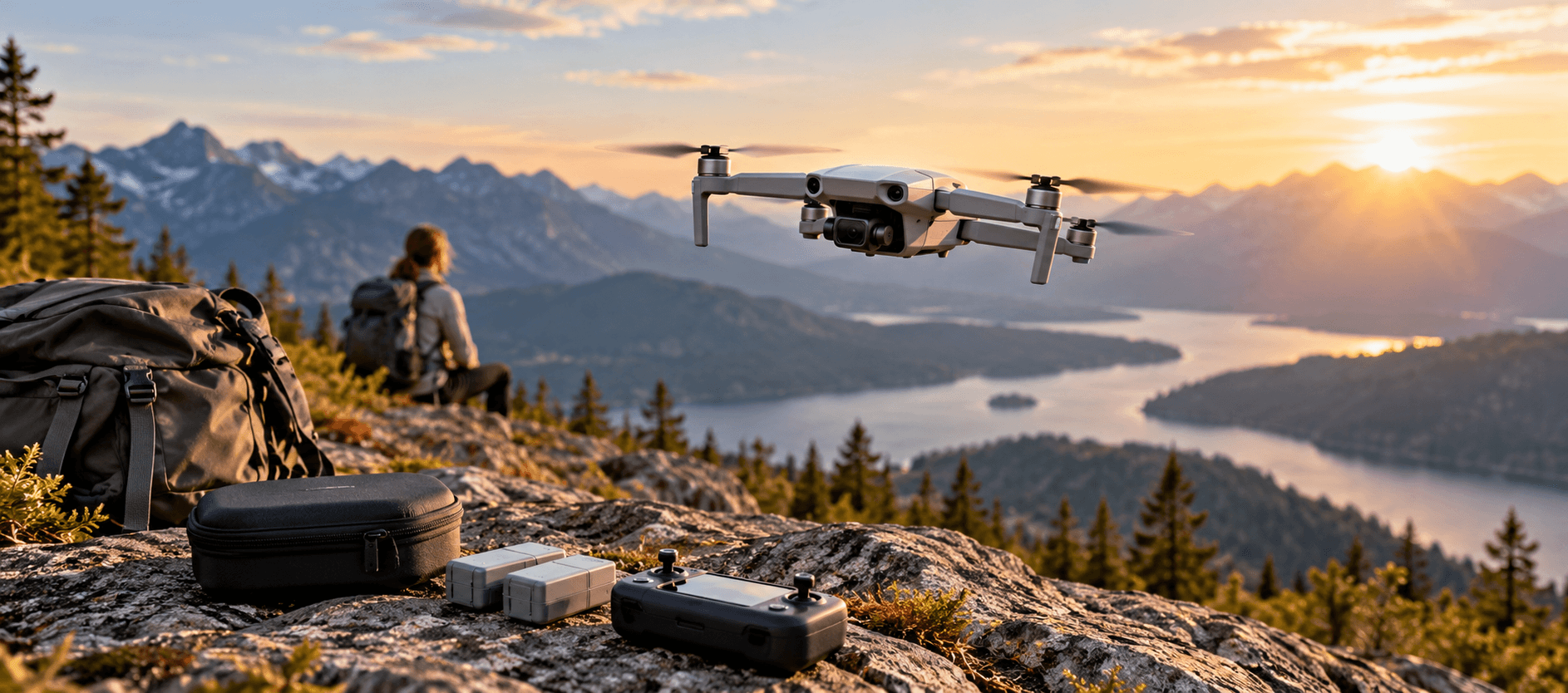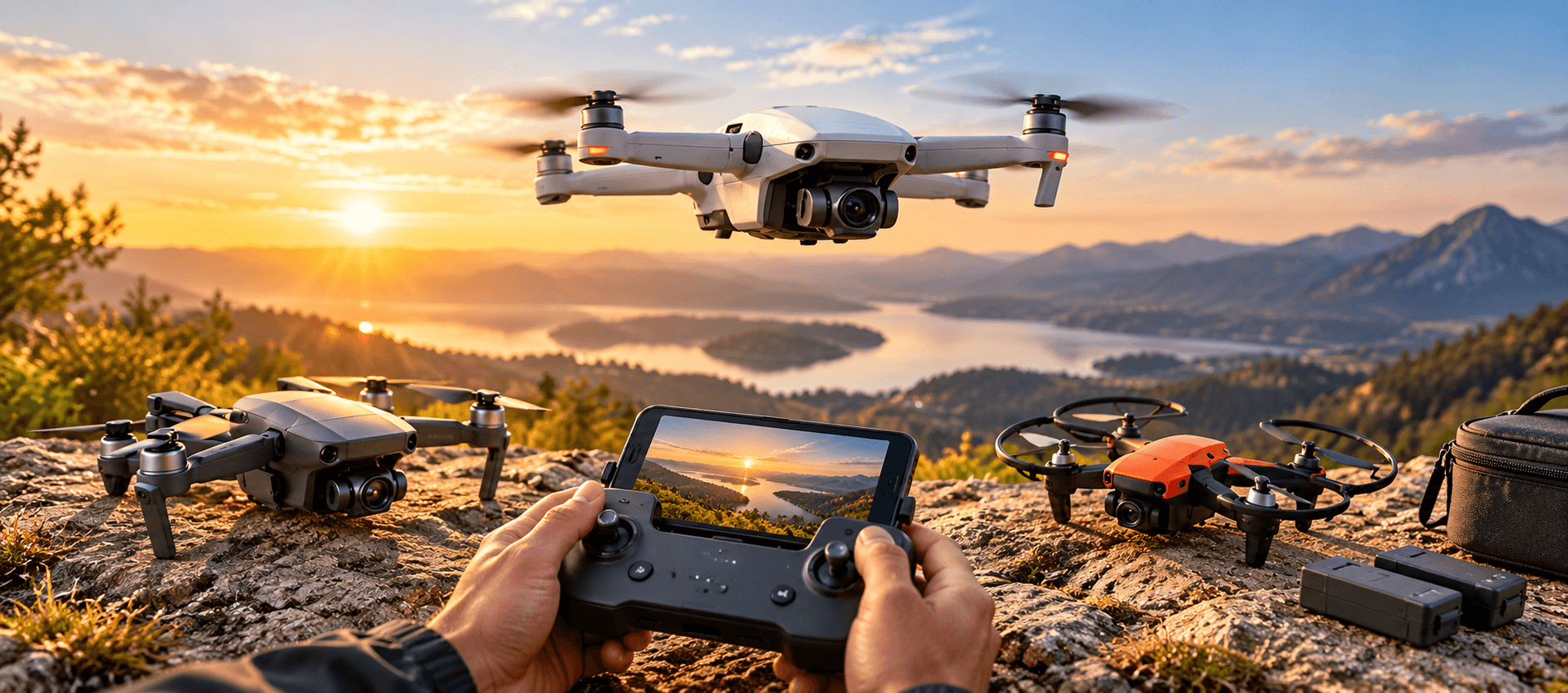
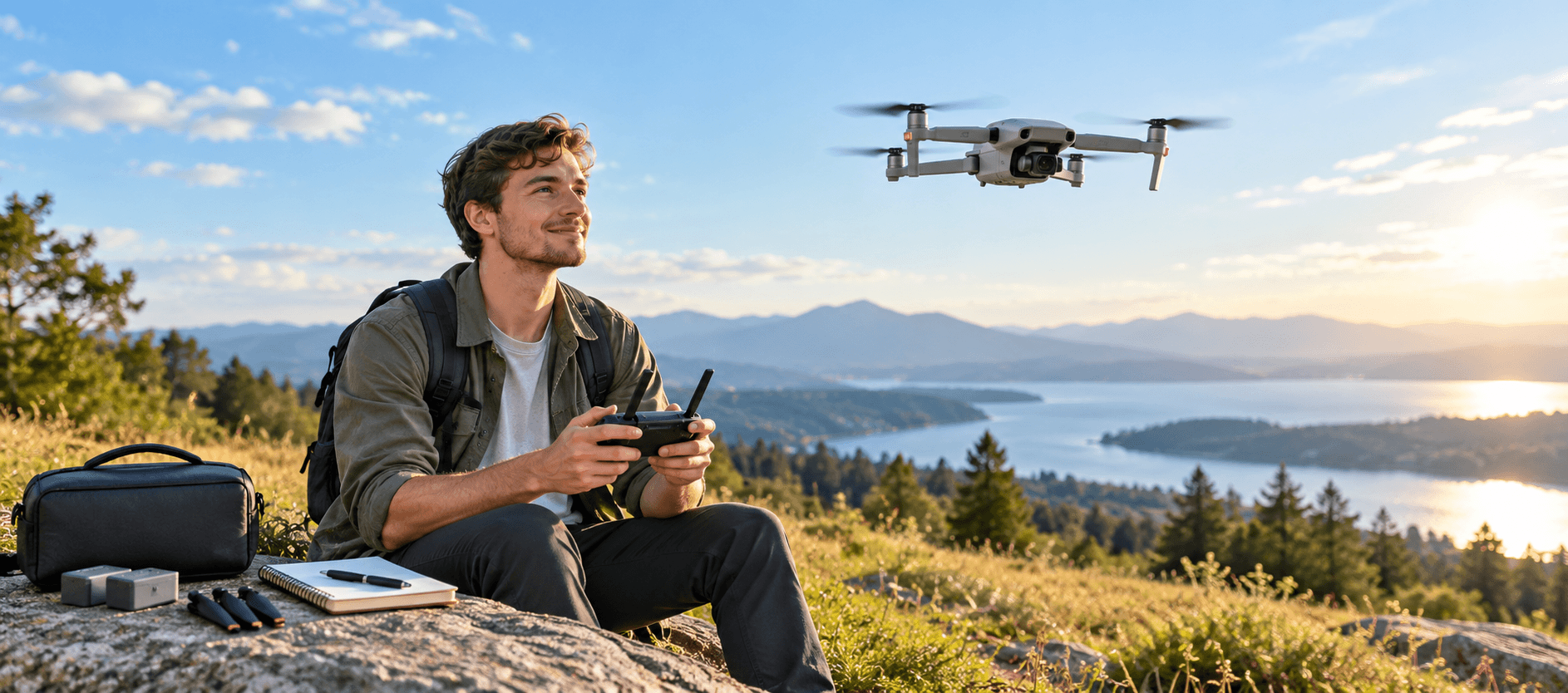
For your first drone, prioritize predictable controls, stable hovering, and a safe way to recover or land the aircraft. GPS-assisted positioning and return-to-home are valuable for outdoor flying when available. Choose a manageable size, budget for spare batteries and propellers, and pay for advanced camera features only if filming is a main goal.
The best choice depends on what you plan to do most: practice basic flying, record occasional travel clips, or develop aerial photography skills. Compare how each option performs those tasks in realistic conditions, rather than judging it only by camera resolution or advertised maximum flight time.
How to Pick Your First Drone: Start With Your Flying Goals
Before you compare specs, decide what you want your drone to do most often. A beginner who wants to practice takeoffs and hovering needs different features than someone who wants polished video or a travel-friendly drone they can pack easily.
Start with one main goal and one secondary goal. Give less weight to features that do not help with either one, even if they sound impressive on a specification sheet.
Learning to Fly for Fun
If your goal is simply to learn, look for stable hovering, forgiving controls, and beginner flight modes that reduce stress when you make small mistakes. Affordable replacement propellers and parts also matter because learning often includes a few rough landings.
Taking Travel Photos and Casual Videos
For travel, portability and setup speed matter as much as image quality. A lightweight drone can be easier to carry on day trips, but you still need open space, calm conditions, and attention to local rules wherever you fly.
Exploring Aerial Photography and Content Creation
If you want better footage, compare camera sensors, gimbals, and manual settings rather than only looking at resolution. A more advanced model can be worth the higher budget when you already know you want steadier footage, tracking tools, or more control over your shots.

How Much Should You Spend on Your First Drone?
Budget affects more than the sticker price. It also influences flight stability, camera quality, safety features, controller experience, and how much you can spend on spares and accessories.
Think in terms of buying tiers rather than fixed price cutoffs: costs, bundles, and features change. This comparison shows what to prioritize at each stage.
| Buying tier | Features to prioritize | Likely trade-off |
| Low-cost practice | Simple controls, forgiving flight modes, inexpensive replacement parts | GPS assistance and stable footage may be limited |
| Mid-range all-rounder | GPS-assisted hovering, return-to-home, stabilized video, practical battery options | Advanced obstacle sensing or manual camera tools may be limited |
| Higher-end creative use | More camera control, stronger stabilization, richer safety features, room to grow | Higher purchase and repair costs; more features to learn |
Do not forget hidden costs. Plan for spare batteries, charging gear, memory cards, a case, replacement propellers, and possible repair costs so your total setup cost stays realistic.

What Drone Rules Should Beginners Know in the U.S.?
Before buying a drone for recreational flying in the United States, check current FAA guidance on registration, the TRUST safety test, Remote ID, and airspace. The rules depend on how you use a drone as well as on its weight.
A drone weighing less than 250 grams and used exclusively for recreational flying is generally exempt from FAA registration. That exemption does not remove TRUST, visual-line-of-sight, or airspace requirements. Non-recreational flights may be regulated under Part 107 even with a lightweight drone.
FAA Registration, TRUST, and Remote ID Requirements
Recreational flyers must pass the free TRUST test and carry proof when flying. Drones weighing 250 grams or more generally require registration; drones that are required to be registered generally must comply with Remote ID unless operated in an FAA-recognized identification area (FRIA). Always confirm current FAA requirements and exceptions.
Where Can You Legally Fly Your First Drone?
Keep your drone within visual line of sight and give way to other aircraft. Recreational flights in uncontrolled (Class G) airspace generally must stay at or below 400 feet above ground level. Controlled airspace requires FAA authorization. Check airspace information and local park or property rules before each flight.

Beginner Drone Buying Checklist: What to Check Before You Buy
Use this short priority checklist to compare your finalists. Features are only helpful if they make your actual flights safer, easier, or more enjoyable.
Compare information from several manufacturers and independent sources. Look for clear explanations of hovering behavior, recovery features, usable battery life, controller setup, and the availability of replacement parts.
| Priority | What to look for | Why it matters |
| Essential | Predictable controls; a safe recovery/landing plan; FAA rule compliance | Build confidence and avoid preventable mistakes |
| Strongly useful | GPS-assisted hover and return-to-home for outdoor use; usable flight time; replaceable parts | Reduce workload and keep ownership practical |
| Optional | Advanced obstacle sensing, subject tracking, manual camera controls, premium resolution | Useful only when matched to your goals and budget |
What Should You Do Before Your First Drone Flight?
Start with preparation, not tricks. Charge batteries, update software, pair the controller, check the weather and airspace, and choose a permitted open area away from crowds, trees, and power lines.
For your first sessions, practice controlled takeoffs, steady hovering, slow turns, gentle forward and backward movement, and smooth landings. Those basics build confidence faster than trying advanced camera moves right away.
Official FAA Resources for First-Time Drone Pilots
Use these official FAA resources to verify the latest rules before buying or flying:
- Federal Aviation Administration — Recreational Flyers: https://www.faa.gov/uas/recreational_flyers
- Federal Aviation Administration — How to Register Your Drone: https://www.faa.gov/uas/getting_started/register_drone
- Federal Aviation Administration — The Recreational UAS Safety Test: https://www.faa.gov/uas/recreational_flyers/knowledge_test_updates
- Federal Aviation Administration — Remote ID: https://www.faa.gov/uas/getting_started/remote_id
For product comparisons, verify manufacturer specifications, bundle contents, replacement-part availability, support policies, and current prices with more than one source. Real-world endurance can differ from advertised maximum flight times.
FAQ
What drone should I buy as my first drone?
Look for easy-to-understand controls, predictable flight behavior, manageable wind handling, and accessible spare parts. For outdoor flying, GPS-assisted hovering and reliable return-to-home are useful advantages, but a premium camera is not a requirement for learning.
How much should a beginner spend on a drone?
Set your budget by use case, then add accessories. A realistic starting budget should include batteries, propellers, storage, and a case, because the drone price alone rarely covers everything you need to fly comfortably.
Is GPS or camera quality more important for a beginner drone?
GPS and reliable flight behavior usually matter more at the start because they reduce pilot workload and help with hovering and recovery. Camera quality becomes more important once you can fly smoothly enough to make good use of it.
Are selfie and follow-me drones good for beginners?
They can be convenient for casual clips, but automatic tracking does not replace learning basic control or checking your surroundings. Compare obstacle awareness, emergency stopping, battery limitations, and the conditions in which tracking is designed to work. A conventional controller may be more useful if you want to build broader flying and photography skills.
Conclusion
Your first drone should fit your purpose, budget, and flying environment. In most cases, that means prioritizing stable control, GPS-assisted hovering, return-to-home, and a manageable size before chasing premium camera numbers.
Before you buy, shortlist two or three candidates, ideally from more than one manufacturer. Compare handling, battery bundles, repair options, and the legal requirements for your intended use. Where possible, consult credible flight demonstrations and manufacturer documentation. The right first drone is one you can operate safely and confidently as your skills improve.