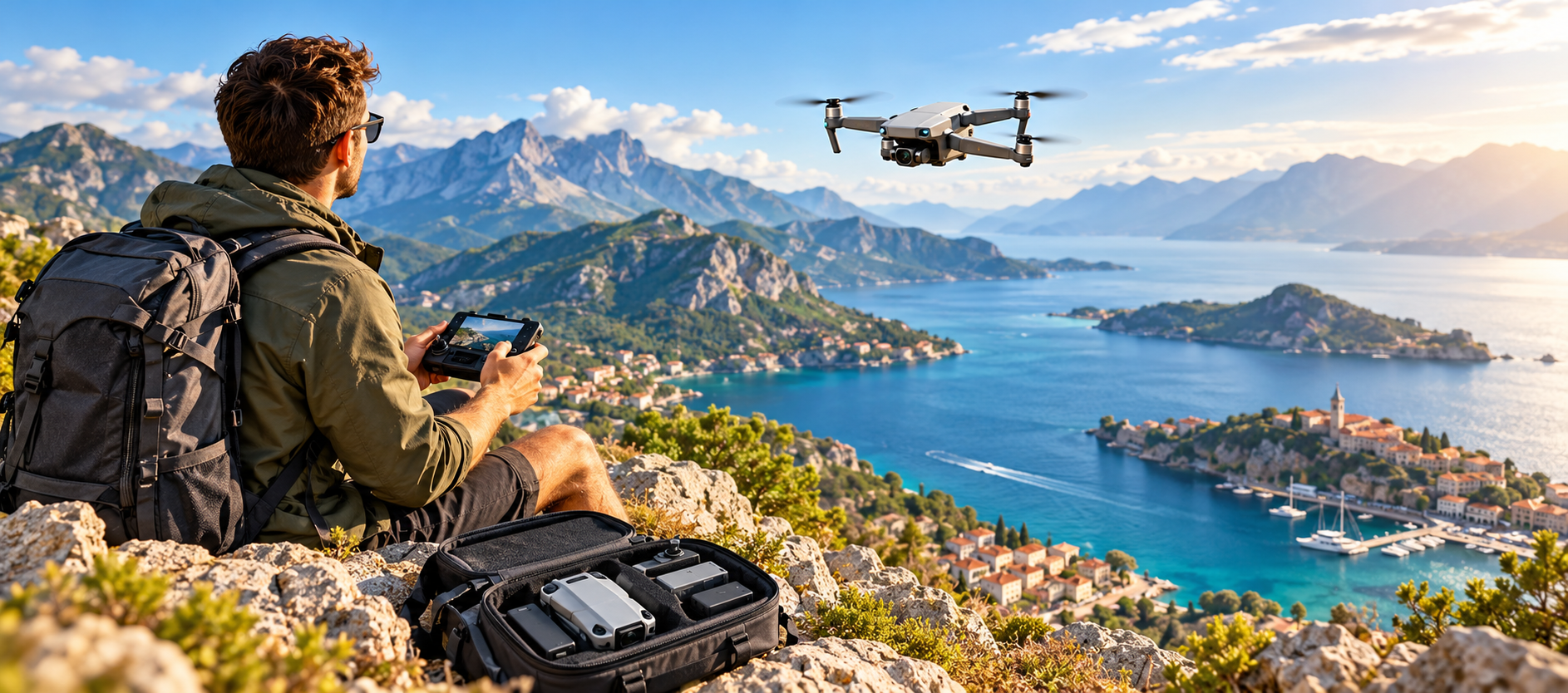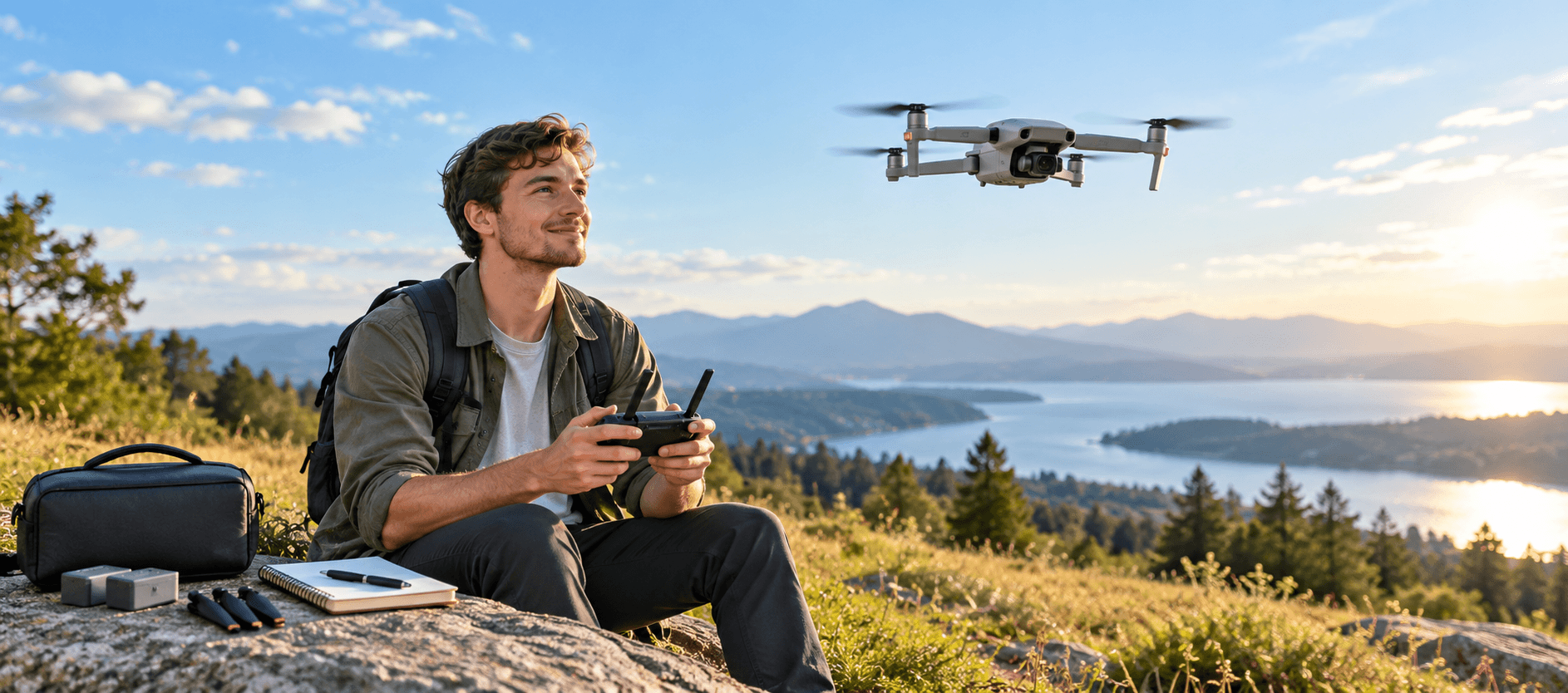
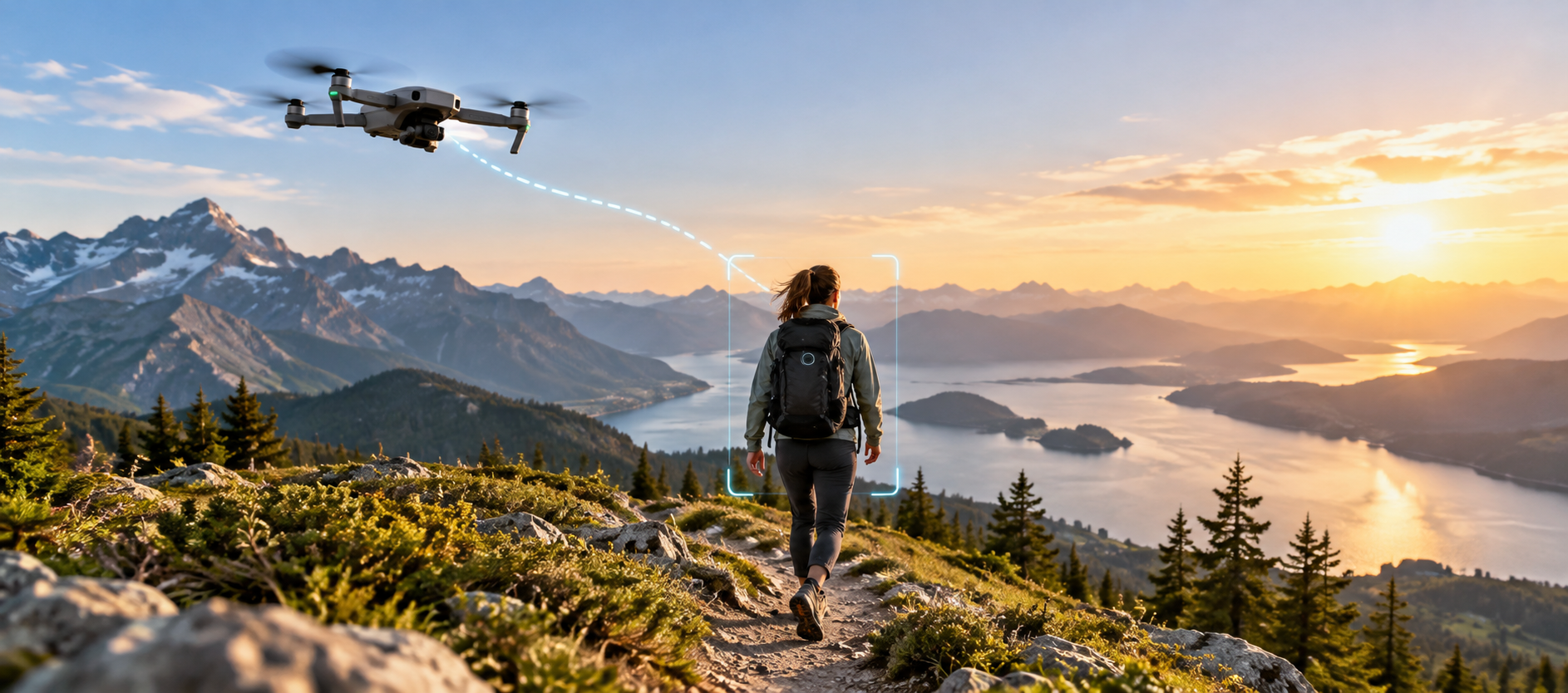
The best follow-me drone depends on what you want to film. If you want hands-free filming while walking or running, a compact self-flying drone is usually the easiest fit. For hiking and travel, a lightweight model is often the most practical choice. For cycling or faster action, compare drones with stronger tracking and more responsive obstacle sensing first. If your priority is cinematic footage, a camera-focused drone may be the better match.
No follow-me drone can guarantee perfect obstacle avoidance. Trees, branches, poor lighting, and high speeds can still interrupt tracking or create safety risks. Before you buy, compare tracking reliability, obstacle sensing, battery life, portability, and local flight rules so the drone fits your real filming conditions.
How Does Automatic Drone Tracking Work?
Follow-me drones use different tracking methods, and the method shapes real-world performance. Visual subject tracking uses the drone’s camera to recognize a person and keep them framed. It works well for walking, jogging, and casual outdoor filming, but it can fail if the subject is blocked or leaves the camera’s view.
Some drones use GPS data from a phone, controller, or paired device to follow a subject. That approach can work well in open spaces, but it is usually less precise than visual tracking. A few models combine subject detection, path prediction, and obstacle sensing, but sensing an object is not the same as avoiding it safely. That is why tracking quality matters more than marketing claims about automation.

Best Follow-Me Drones in 2026: Which Type Is Right for You?
For straightforward hands-free filming, compact self-flying drones are usually the easiest category to use. They are built around automatic subject tracking, quick launch, and simple operation, which makes them a strong fit for solo creators and casual outdoor recording. The trade-off is that they often have shorter battery life, less flexible camera control, and narrower sensing coverage.
For hiking and travel, lightweight follow-me drones are often the best compromise because they pack small, carry easily, and are simpler to bring on long days outdoors. For cycling and faster action, more advanced tracking drones are worth comparing first because they tend to prioritize responsiveness and better obstacle sensing. Camera-focused drones are usually better when image quality and stabilization matter most, while entry-level follow-me drones can work for beginners in open, low-risk spaces.
Follow-Me Drone Types Compared
| Drone type | Typical strengths | Best fit | Important limitations |
| Compact self-flying drone | Designed around quick launch and automated subject tracking; often prioritizes ease of use and portability. | Solo creators, walking, jogging, and simple hands-free clips. | May offer shorter recording sessions, less camera control, or limited obstacle sensing. Verify exact mode and sensor limits. |
| Lightweight follow-me drone | Easy to carry on trips and outdoor activities; can balance portability with tracking features. | Hiking, travel, and everyday outdoor filming. | Wind resistance, battery life, and tracking reliability vary significantly by model. |
| Advanced tracking drone | May offer more responsive tracking modes and more extensive sensing systems. | Faster movement and action-oriented filming, when the manufacturer explicitly supports the activity. | Higher cost or setup complexity; obstacle avoidance is never guaranteed, especially around branches, cables, and people. |
| Camera-focused drone | Often prioritizes image quality, stabilization, framing control, and flexible camera settings. | Cinematic footage and users who want more control over shots. | May rely more on a controller and require more setup than a purpose-built self-flying drone. |

How Do Tracking Performance and Safety Compare?
Tracking accuracy is the first feature to compare because it determines whether the drone can keep the subject in frame when speed, direction, or distance changes. Better systems can reacquire a subject after a brief loss, but they still struggle more in forests, crowded places, and mixed lighting. That is why a drone can look impressive in an open field and still feel unreliable on a trail or road.
Obstacle awareness matters just as much. Some drones sense objects in only a few directions, while others cover more angles and react more cautiously. Even then, branches, cables, buildings, and uneven terrain can still create failure points. Camera stability, flight time, wind resistance, and packed size should also be part of the comparison, because a drone that is easy to carry may still perform poorly in gusty conditions or during longer recording sessions.
Key Features to Compare Before Buying
| Comparison point | What to check | Why it matters | Practical buying check |
| Subject tracking | Supported tracking modes, subject reacquisition, and speed or distance limits. | Determines whether the subject stays framed when movement changes. | Look for supported activities and stated tracking limits; do not assume every mode suits running or cycling. |
| Obstacle sensing | Sensor directions, blind spots, lighting requirements, and supported flight modes. | Detection may reduce some collision risks but cannot guarantee avoidance. | Check the manual for sensor coverage and situations where sensing is unavailable or reduced. |
| Tracking movement | Supported activity types, tracking speed, turning behavior, and following distance. | A mode suitable for walking may not be suitable for fast action. | Match the intended activity to the manufacturer’s stated operating limits and test only in a clear, low-risk area. |
| Camera and stabilization | Resolution, frame rates, stabilization method, and camera-control options. | These affect footage quality and flexibility when composing shots. | Choose based on the output you need; higher resolution alone does not guarantee smoother footage. |
| Practical flight time | Published maximum flight time, battery options, and charging requirements. | Real recording time changes with wind, speed, settings, and battery condition. | Treat advertised maximums as controlled-test figures, not guaranteed recording time. |
| Portability and weather | Packed size, takeoff weight, wind limits, and any stated water-resistance rating. | A portable drone may still be unsuitable for gusty, wet, or exposed locations. | Check the packed dimensions and operating limits against the locations where you plan to film. |
| Operator responsibility | Visual-line-of-sight requirements, airspace restrictions, and site-specific rules. | Automatic tracking does not remove legal or safety obligations. | Review current FAA guidance and local rules before every flight; avoid relying on automation as a substitute for supervision. |

How Should You Choose the Best Follow-Me Drone for Your Needs?
Choose by activity first. Hiking and travel usually favor portability and simple operation. Running and cycling need stronger tracking consistency and faster response. Cinematic filming calls for better stabilization and image quality. Beginners usually do better with predictable controls and clear safety behavior than with the most aggressive tracking mode.
If hands-free filming with minimal setup is your priority, start by comparing compact self-flying drones with more camera-focused options. The first category may be easier for solo creators, while the second may offer more control over framing and camera settings. Judge each type against your use case, and verify subject-recognition performance, obstacle-sensing coverage, battery availability, wind resistance, camera quality, and accessory costs in the manufacturer’s current documentation.
A common mistake is assuming every follow-me drone has advanced obstacle avoidance or that advertised tracking speed guarantees real-world reliability. Automatic subject tracking is useful, but it is not the same as unrestricted autonomous flying. If you want a broader buying checklist, see action drone buying guide.
Comparison note: This guide compares broad drone categories rather than ranking individual products. Features vary by model and software version, so check the manufacturer’s current specifications and operating limits before buying. Published maximum flight times are not guarantees of real-world recording time.
References and Evidence to Verify
Use the following official sources to verify product specifications, flight rules, and location-specific restrictions before buying or flying:
- Federal Aviation Administration, Recreational Flyers & Remote ID Guidance, https://www.faa.gov/uas/recreational_flyers
- Federal Aviation Administration, Know Before You Fly, https://www.faa.gov/uas/recreational_flyers/where_can_i_fly/basics
- National Institute of Standards and Technology, Unmanned Aircraft Systems Research Resources, https://www.nist.gov/ctl/pscr/unmanned-aircraft-systems
- Academy of Model Aeronautics, Safety Code and Flying Guidelines, https://www.modelaircraft.org/safety
- National Park Service, Unmanned Aircraft in the National Park System, https://www.nps.gov/subjects/sound/unmanned-aircraft-in-the-national-parks.htm
Conclusion
Follow-me drones in 2026 are best judged by fit, not by a single ranking. Compact self-flying drones are the easiest option for simple hands-free recording, lightweight models suit hiking and travel, advanced tracking drones fit faster action, and camera-focused drones are stronger when video quality matters most.
The real decision comes down to tracking reliability, obstacle sensing, portability, and safety. Compare the drone type against your main activity, then verify official specifications and local flight rules before buying. As a final step, check the model’s tracking limits, obstacle-sensing coverage, battery life, and packed size against your own filming scenario.
FAQ
What is the best follow-me drone for beginners?
The easiest choice is usually a compact model with simple tracking modes, predictable controls, and clear safety prompts. Beginners should prioritize stable hovering, easy launching, and basic obstacle sensing before chasing the most advanced tracking claims.
Can a follow-me drone automatically follow you without a controller?
Some drones can track a subject with reduced manual input, but that does not remove operator responsibility. In the United States, recreational flyers generally must keep the aircraft within visual line of sight and comply with applicable airspace and operating rules. Always check current FAA guidance and local restrictions.
How do follow-me drones avoid obstacles?
They may use vision sensors, distance sensors, or both to detect objects and slow down, stop, or reroute. The limitation is that branches, cables, low light, and complex terrain can reduce reliability, so avoidance is helpful but not foolproof.
When is a compact self-flying drone a logical option?
A compact self-flying drone can make sense if you want hands-free filming while walking, hiking, or creating solo content. Before deciding, compare tracking limits, obstacle-sensing coverage, battery life, and camera controls. No automated mode removes the operator’s safety responsibilities.