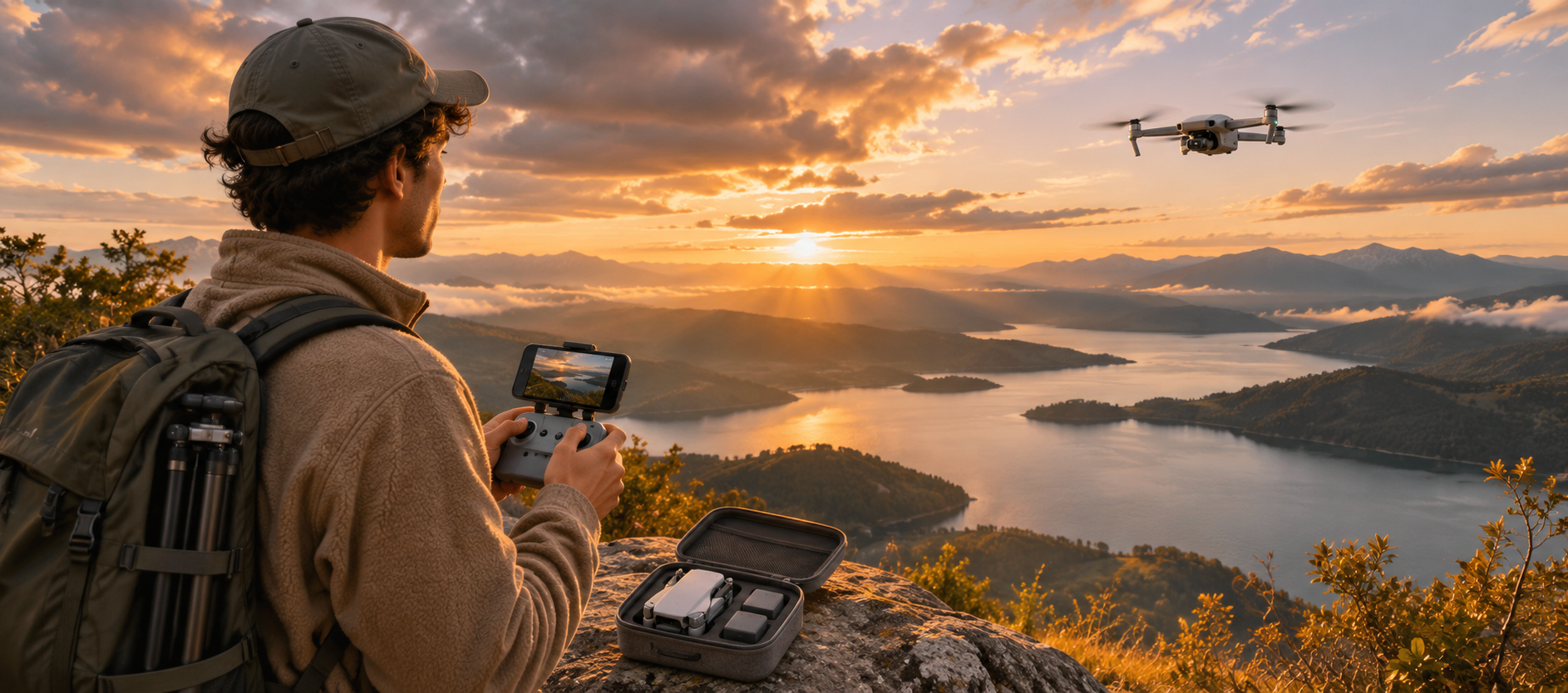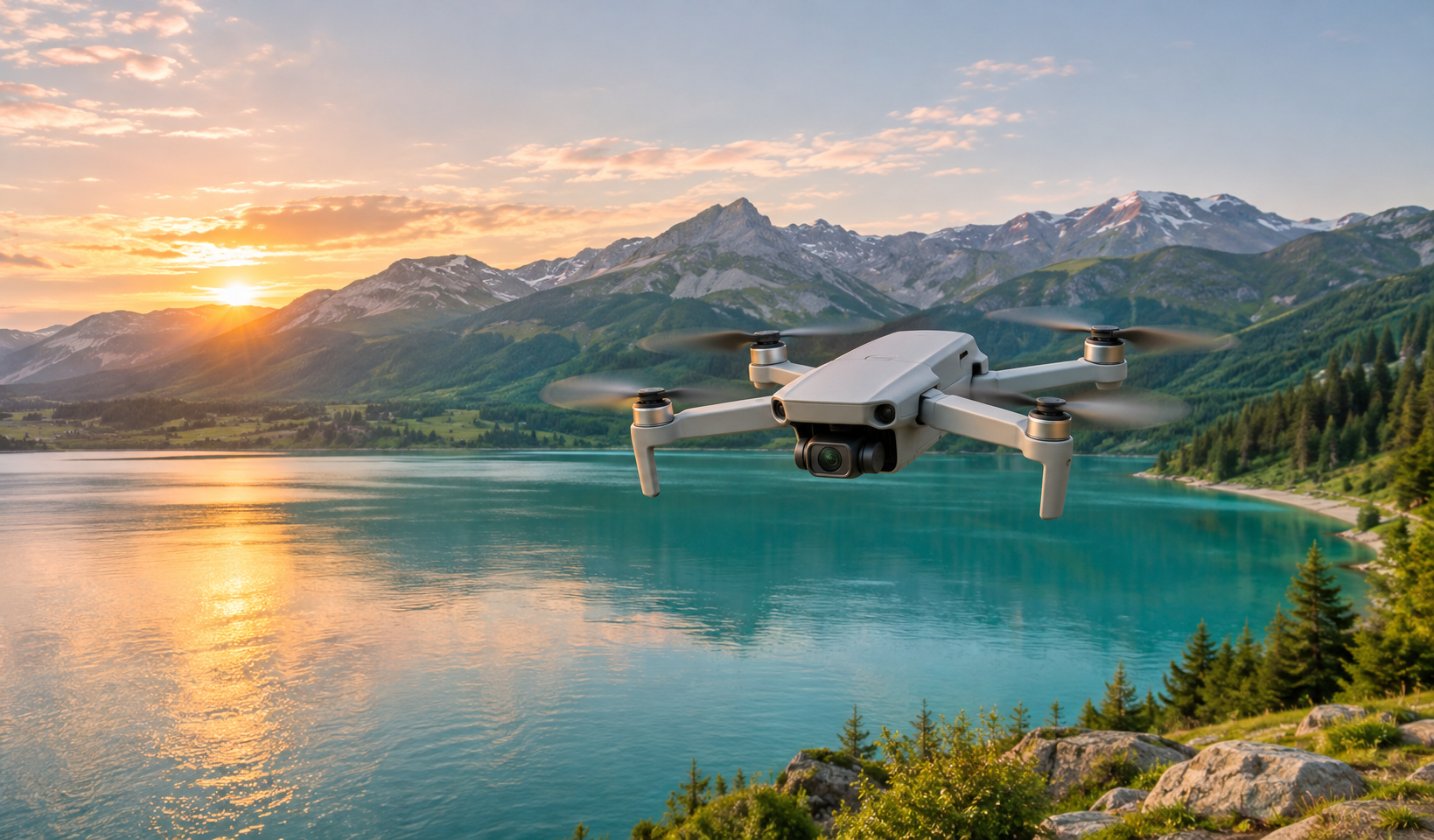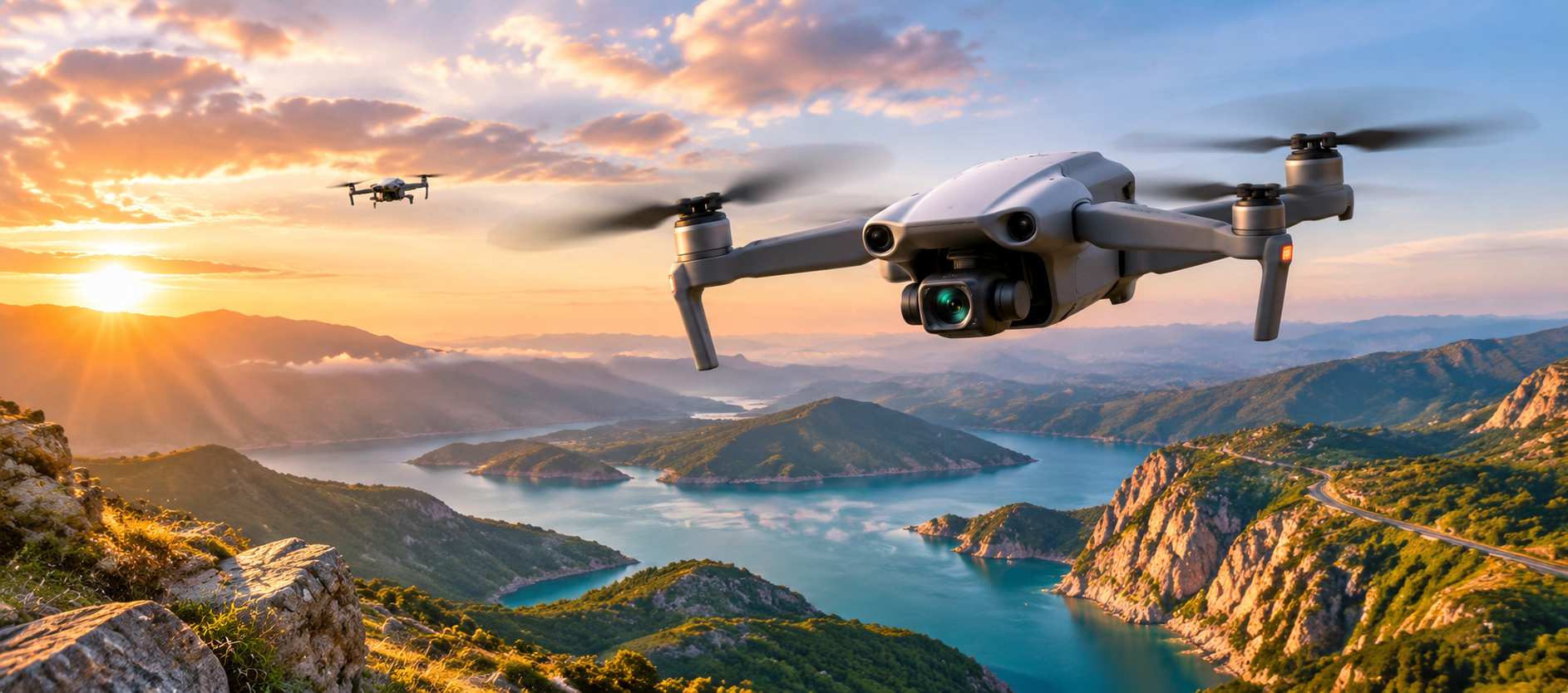
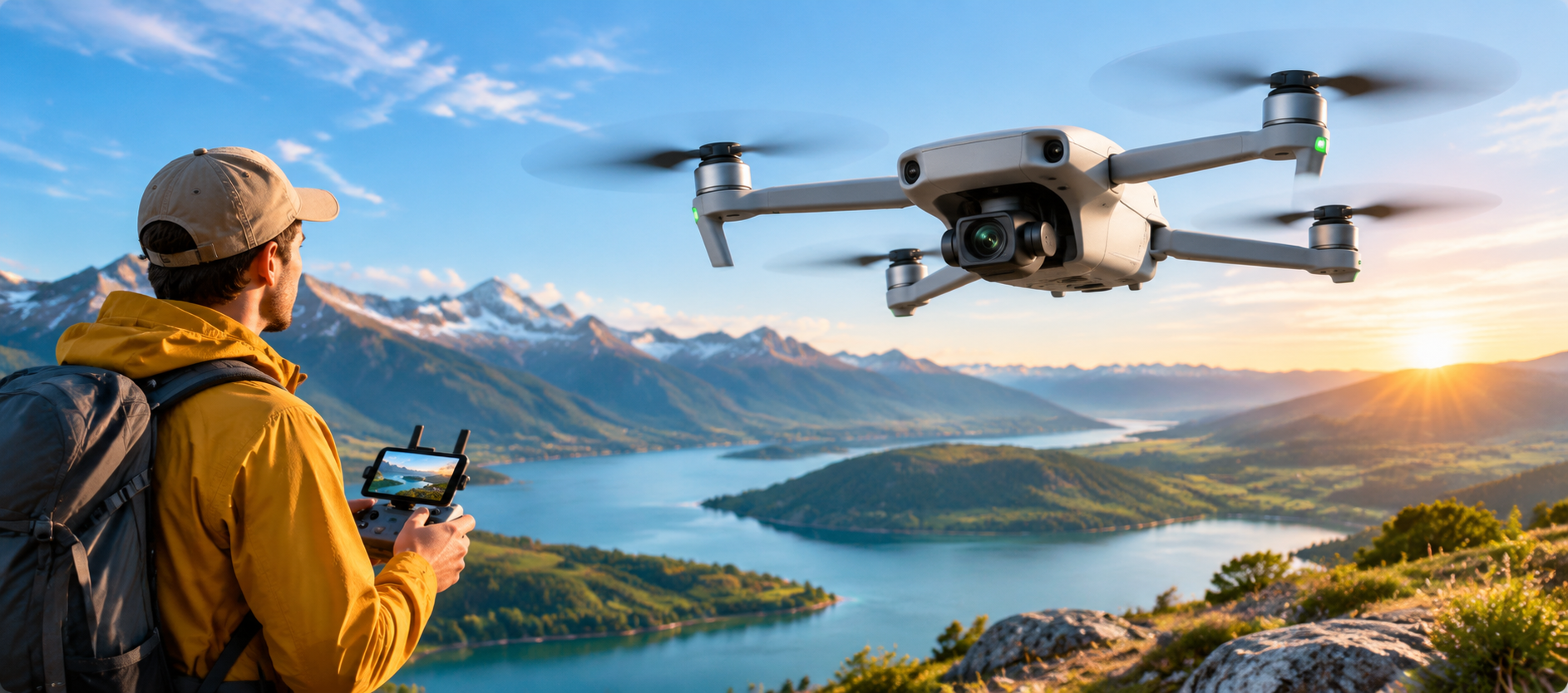

Which sub-250g drone has the best camera? What is the best drone under 250 grams for travel photography? For maximum photo detail and editing latitude, a premium lightweight drone with a large image sensor, RAW capture and advanced 4K video is usually the strongest option. For travel, however, a well-balanced model with a capable 1/1.3-inch-class sensor can be easier to carry and offer better overall value.
The most useful comparison is not simply megapixels versus price. Sensor size, RAW files, video frame rates, stabilization, actual takeoff weight and ease of shooting all affect the images you bring home. The categories below help match those trade-offs to the way you photograph.
Which Type of Sub-250g Drone Has the Best Camera?
Modern mini drones serve different creative needs. Some emphasize clean landscape photographs, while others prioritize quick travel clips, automatic filming or flexible reframing after the flight.
Premium Large-Sensor Camera Drones
A premium sub-250g model with a 1-inch-class sensor can provide stronger low-light performance, smoother tonal transitions and more usable shadow detail than many smaller-sensor alternatives. RAW photos, high-bitrate 4K and advanced color modes are especially helpful for sunrise landscapes and careful post-production. Sensor size alone is not a guarantee: lens quality and image processing still matter.
Balanced 4K Travel Drones
For hiking, road trips and city breaks, a compact drone built around a capable 1/1.3-inch-class sensor often offers the sweet spot. With RAW shooting and stabilized 4K where supported, it can capture detailed coastlines, mountains and architecture without demanding a large travel kit. In good daylight, the real-world difference from a pricier camera may be modest.
Budget Mini Drones
An affordable mini drone is suitable for learning composition and basic camera movement. Look for stable hovering, a genuine gimbal or effective stabilization and uncomplicated controls. Smaller sensors may struggle with noise at dusk, and some models offer only JPEG stills, but carefully exposed daylight shots can still look impressive.
Automated Selfie and 360-Degree Drones
Selfie-oriented models favor subject tracking and short autonomous clips, making them convenient for solo travelers. Lightweight 360-degree systems record an all-around view that can be reframed later. They are creatively flexible, although a cropped view from spherical footage does not retain the full resolution of the original recording.
Sub-250g Camera Quality Comparison
Use this category-level comparison to shortlist features rather than treating it as a claim that every drone in a category has identical specifications.
| Drone category | Camera and recording profile | Best fit and trade-off |
| Premium large-sensor | 1-inch-class where available; RAW stills; advanced 4K/10-bit on supported models | Best detail and grading flexibility; typically costs more |
| Balanced travel 4K | Often 1/1.3-inch-class; RAW on some models; stabilized 4K | Good portability and image quality; fewer premium controls |
| Budget mini | Usually smaller sensor; JPEG and basic 4K common | Accessible for beginners; weaker low-light latitude |
| Selfie / 360 | Automated clips or panoramic capture; formats vary by model | Easy solo filming or reframing; less traditional photo control |
Always confirm whether the published weight includes the installed battery and accessories. A drone advertised near 249 g may cross the threshold with a different battery, propeller guard or other attachment.
What Camera Features Matter Most Under 250g?
Sensor Size and Megapixels
Larger sensors generally collect more light with comparable technology, improving the potential for dynamic range and cleaner shadows. That advantage is most visible at dusk, above reflective water or when a bright sky sits behind a dark landscape. A high megapixel figure is not a substitute for good optics or exposure; some 48MP and 50MP modes also depend on computational or pixel-binning techniques.
RAW Photo Capability
RAW files preserve more of the captured image information than a heavily processed JPEG, making it easier to fine-tune white balance, contrast and highlight recovery. They are especially useful for sunrise scenes and backlit mountains. RAW cannot rescue completely clipped highlights or eliminate motion blur, so good technique remains essential.
4K Recording and Stabilization
Look beyond the 4K label. A practical camera should offer useful frame rates, a stable gimbal, good exposure behavior and sufficient recording quality. Shooting at 24 or 30 frames per second suits ordinary travel films; 60fps can create smoother action or slow motion. If available, 10-bit recording and a flat color profile give experienced editors more freedom, but require a consistent grading workflow.
How to Capture Better Mini-Drone Travel Photos
Early morning and late afternoon light often reveals the texture of mountains, beaches and buildings. Use winding roads or coastlines as leading lines, and include nearby objects to create scale. A high viewpoint is not always the strongest: flying lower can reveal layers, depth and patterns that disappear from directly overhead.
Try a straight-down photograph for graphic shapes, an angled landscape frame for depth, or a slow upward reveal behind a foreground feature. Move gently and keep the subject clear in the composition. Always retain visual line of sight and avoid risky maneuvers just to get a dramatic shot.
Recommended Camera Settings for Photos and Video
These settings are starting points, not universal rules. Adjust them for the light, wind, camera capabilities and visual result you want.
| Setting | Practical starting point | Why it helps |
| Photo file format | RAW + JPEG if available | Preserves editing flexibility and a shareable preview |
| Photo ISO | Lowest practical native ISO | Usually reduces visible noise |
| Video capture | 4K at 24/25/30fps | Balances detail with natural motion |
| Action / slow motion | 4K/60fps when supported | Gives smoother motion or slower playback |
| Shutter speed | About 1/50s at 25fps or 1/60s at 30fps | Natural-looking motion blur for video |
| White balance | Fixed value suited to the scene | Avoids color shifts between video clips |
| Color profile | Standard, or log/10-bit when supported | Choose based on editing experience |
For still photos, use a shutter speed fast enough to prevent blur from wind or aircraft motion. For video, an ND filter can help maintain a cinematic shutter speed in bright sunlight, but verify filter compatibility and the total takeoff weight. Watch the histogram to protect clouds, snow and reflective water from overexposure.
How to Edit RAW Photos and 4K Footage
Begin RAW editing with exposure and white balance. Recover highlights cautiously, lift shadows only as far as the file allows and keep color realistic. Moderate noise reduction can clean up low-light images, but strong processing can erase fine textures. For video, match clips before applying a consistent creative grade, and avoid excessive sharpening.

If you shoot a 360-degree format, choose the framing and viewing angle during editing. Plan the delivery resolution in advance because each cropped perspective uses only part of the spherical source image. Smooth, intentional reframing generally produces a more polished travel sequence than constant artificial camera movement.
Buying Checklist: How to Choose a Lightweight Drone
The best camera specification is only useful if the aircraft fits your trips and the way you work. Compare actual image samples from independent reviews along with these practical priorities.
| Priority | What to check | Why it matters |
| Image quality | Sensor class, RAW support, lens quality, 4K modes | Determines detail and editing headroom |
| Flight confidence | Hovering stability, gimbal, wind performance, recovery tools | Helps deliver repeatable, smooth footage |
| Travel practicality | Total takeoff weight, battery life, charging, pack size | Affects portability and legal classification |
For travelers exploring the best drone under 250g, consider how camera design, capture workflow and portability support your actual shooting style rather than comparing one headline number.
Does Staying Under 250g Change Flight Rules?
In the United States, a drone weighing under 250 grams and flown exclusively under the recreational exception generally does not need FAA registration, but TRUST, airspace and other flight rules still apply. Non-recreational operations may fall under Part 107 regardless of weight. Registration and Remote ID requirements depend on the aircraft and the operation. In many European countries, operators of camera-equipped drones may still have to register, even below 250 g.
Official FAA Resources
Before flying in the United States, verify the latest guidance with the Federal Aviation Administration:
• The Recreational UAS Safety Test (TRUST)
Conclusion
For pure photo quality, prioritize a large, capable sensor, RAW capture and dependable stabilization. For everyday travel, weigh those advantages against pack size, control simplicity and real battery endurance. Beginners and solo creators may gain more from predictable flight and useful automated modes than from premium camera specifications.
The right lightweight drone is the one you can carry, fly responsibly and use consistently to make the photographs and videos you envision. Start with your main shooting goal, compare the files that each camera actually produces, and choose the features that will matter after the excitement of the specification sheet fades.
FAQ
Which sub-250g drone has the best camera?
A premium model with a larger sensor, dependable gimbal, RAW capability and flexible 4K modes offers the strongest overall camera potential. Compare real samples before deciding, because lens quality and processing can outweigh individual specifications.
What is the best drone under 250 grams for travel photography?
For most trips, a balanced 4K drone with RAW photo support, stable hovering, practical battery life and an easy-to-pack kit is a smart choice. A more advanced camera is worth considering if twilight landscapes or intensive editing are top priorities.
Do you need RAW photos on a mini drone?
RAW is worthwhile if you edit landscapes or regularly face difficult lighting. If you mainly share casual daylight photos without editing, a reliable JPEG workflow may be sufficient.
Can a drone under 250g make professional-looking 4K footage?
Yes, under suitable conditions. Stable flight, considered composition, controlled exposure and restrained color grading often influence the final result more than the drone's weight alone.