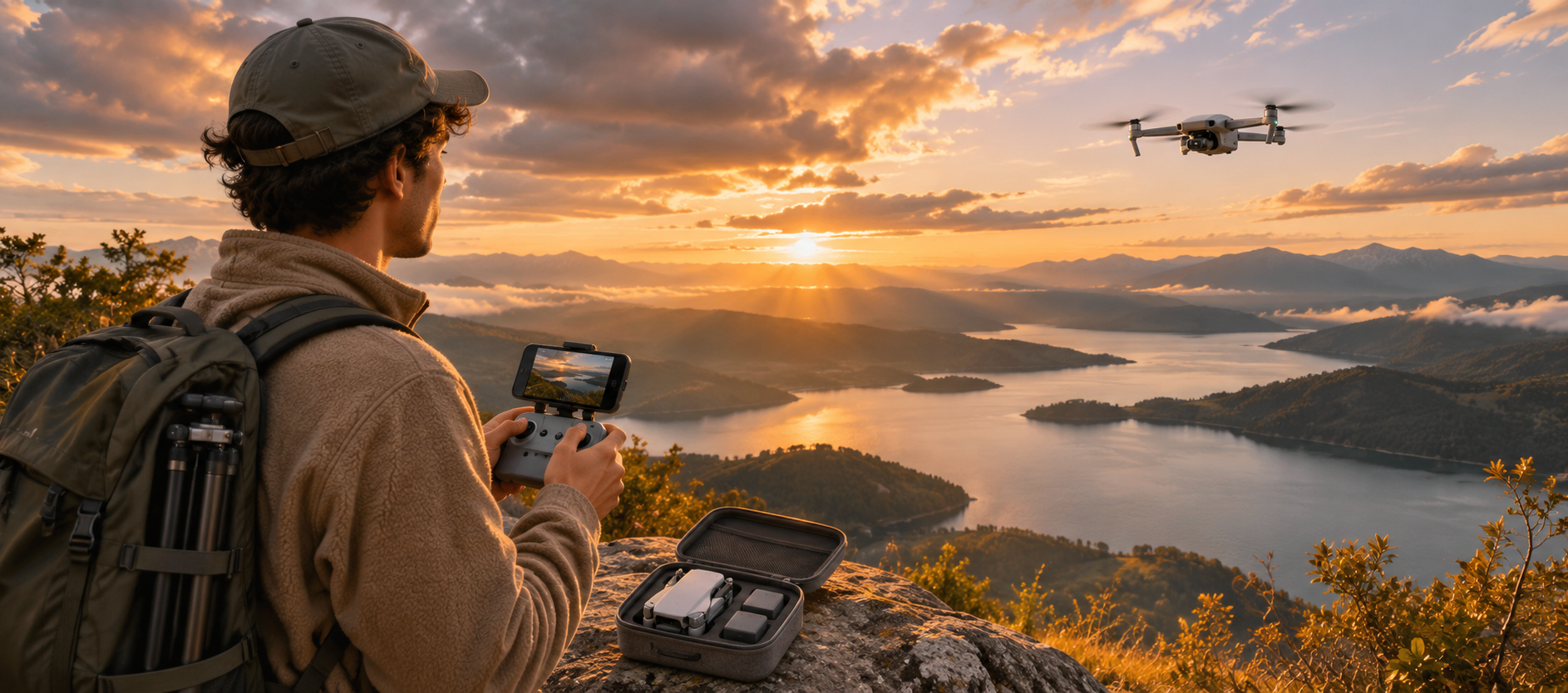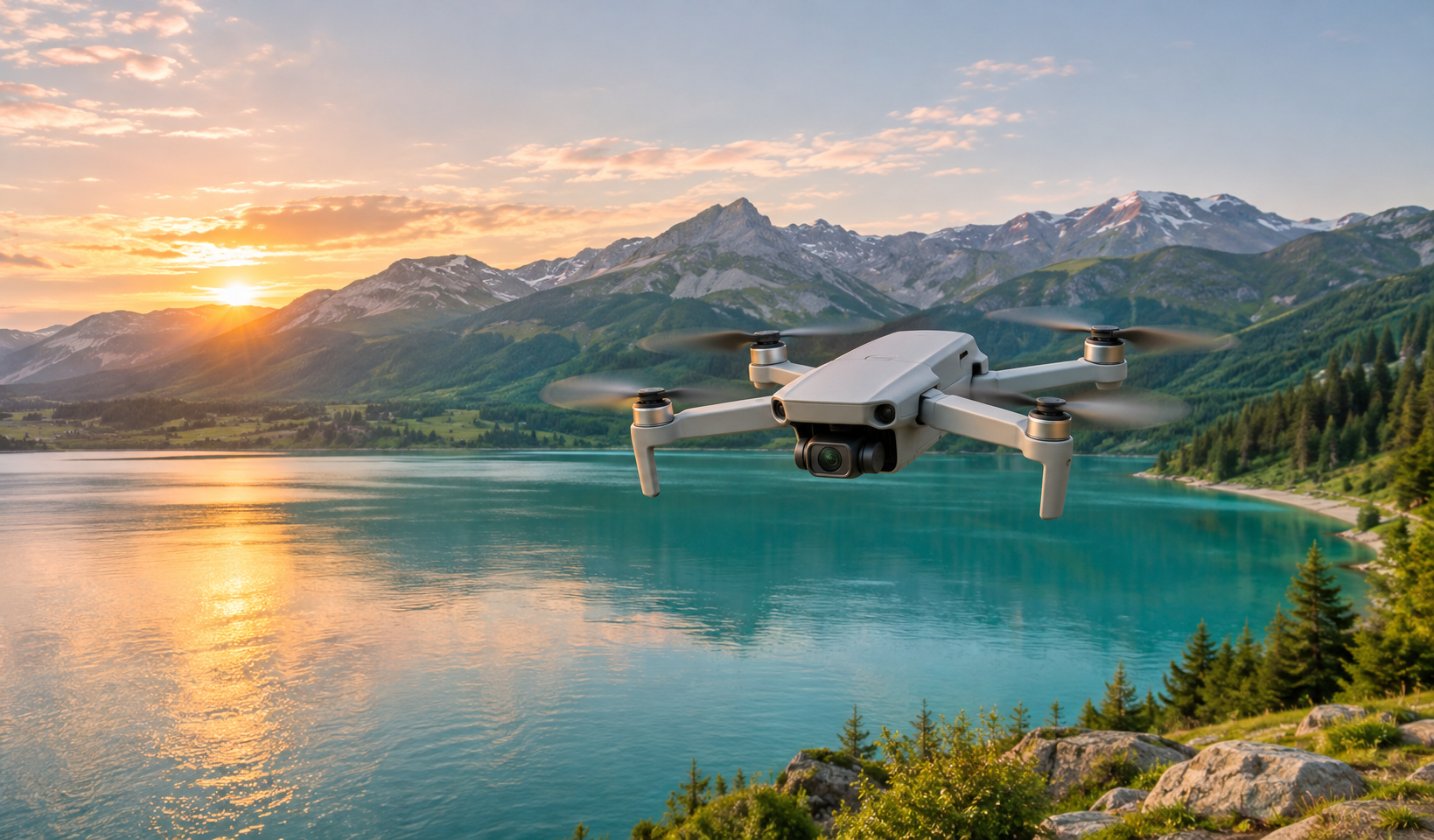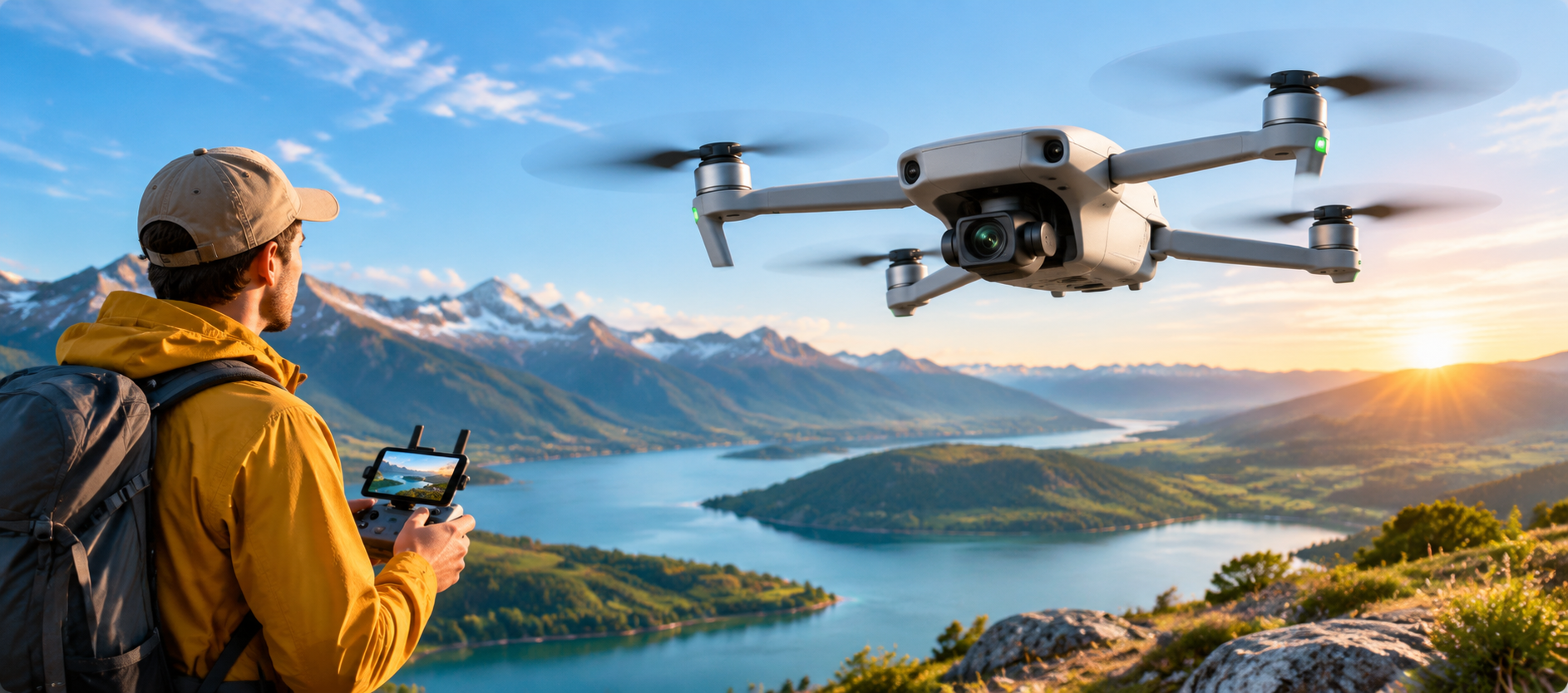
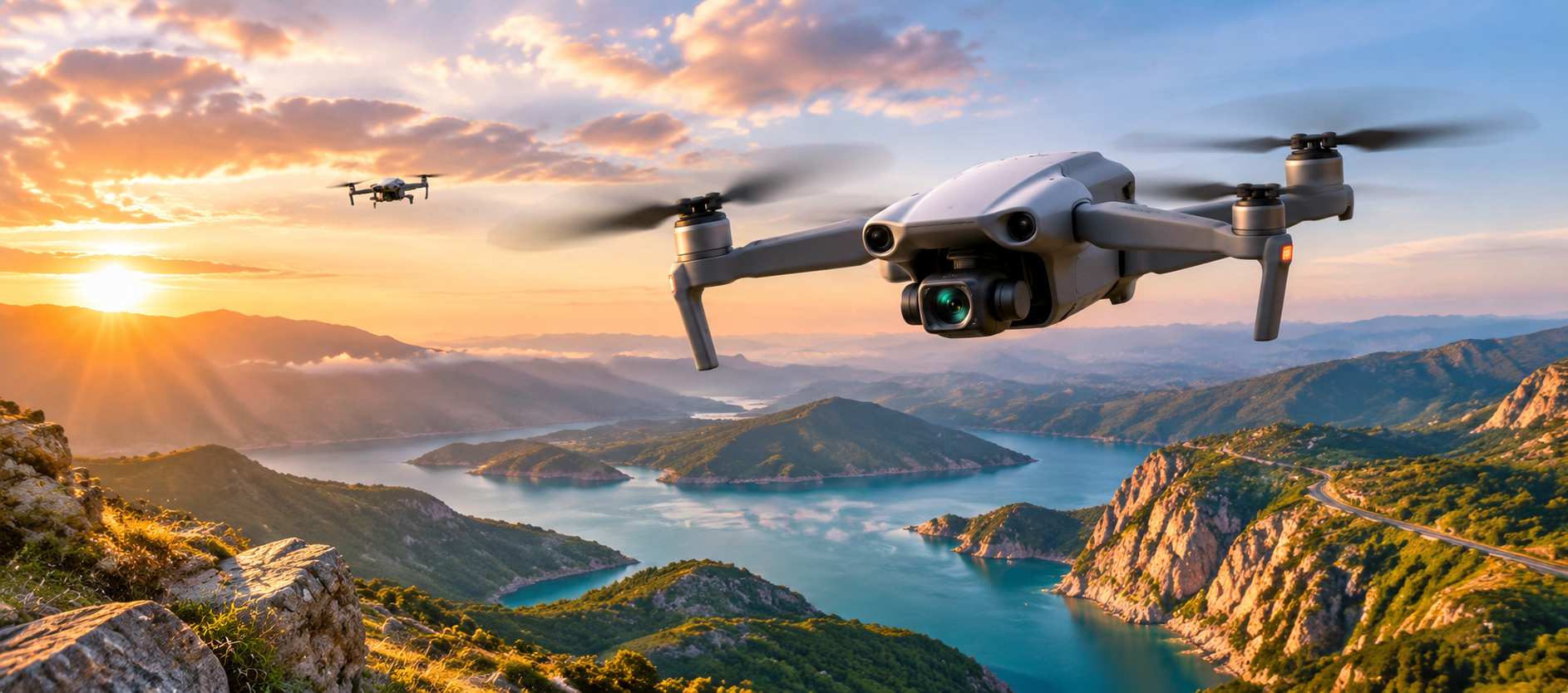
For outdoor landscapes, choose a compact camera drone with a large sensor, good dynamic range, a three-axis gimbal, and reliable wind performance. For the best sub-250g camera, compare sensor size, RAW support, and 4K recording quality. A 1-inch-class sensor, high-resolution stills, and 4K/120fps would be a strong combination when available, but confirm the actual takeoff weight and regional specifications.
Which drone is best for shooting landscapes outdoors? Which sub-250g drone has the best camera? The best fit depends on whether you value image quality, portability, or ease of use. Premium compact camera drones suit demanding landscape work; lightweight foldable models are easier to carry on hikes and trips. Compare real footage and complete specifications, not resolution or advertised flight time alone.
The categories below describe buying types, not specific models. Camera features, accessories, and operating limits vary, so check the exact specifications and manual.

Which Compact 4K Drone Is Best for Outdoor Landscape Photography?
For landscapes, prioritize a larger sensor, RAW photo support, good dynamic range, and a capable lens. A three-axis gimbal keeps video steady, while reliable positioning helps you compose without constant corrections.
For travel, portability may matter more than a small image-quality difference. A foldable drone is easier to carry to remote viewpoints; a larger camera platform suits planned shoots. Consider wind performance, batteries, and safe launch locations.
Best Compact 4K Drone Types: Quick Comparison
| Drone type | Best use | Main benefit and limitation |
| Premium compact camera drone | Detailed landscapes and cinematic video | Larger sensor and advanced recording options; usually costs more |
| Balanced compact camera drone | Everyday photography and travel video | Strong mix of image quality, portability, and price; sensor may be smaller |
| Lightweight sub-250g drone | Hiking, backpacking, and casual travel | Easy to carry and may have different regulatory treatment; wind can affect small aircraft more |
| Budget compact 4K drone | Occasional filming and learning | Lower entry cost; camera, stabilization, and low-light performance may be limited |
| Tracking-focused compact drone | Solo clips and automated subject framing | Convenient creative modes; tracking can fail and does not replace piloting skills |
Categories overlap. Compare the exact sensor, recording formats, controller, obstacle-sensing coverage, and included accessories before choosing.
Best Compact Drone Types for Different Photography Needs
1. Premium Compact Camera Drones: Best for Image Quality
A premium compact camera drone suits creators who put image quality first. Look for a 1-inch-class sensor, high-resolution stills, 10-bit recording, and 4K at multiple frame rates.
This type works well for mountains, coastlines, forests, and architecture. It costs more and rewards careful exposure and color settings. Sensor size alone does not determine image quality; lens, processing, and technique matter too.
2. Balanced Compact Camera Drones: Best All-Round Value
A balanced drone with a 1/1.3-inch-class sensor can deliver detailed photos and 4K footage at a lower cost. Many also offer slow-motion options and intelligent flight assistance.
This is a practical choice for travel, outdoor activities, and short videos. Check for RAW photos, manual exposure, and a flat or Log-style profile; these can be more useful than a headline megapixel count.
3. Lightweight Sub-250g Drones: Best for Travel
Sub-250g drones appeal to hikers because they are easy to pack and may fall under different rules in some places. The weight threshold is not universal permission to fly; registration, airspace, and operating rules still vary.
Compare sensor size, lens, RAW support, video bit depth, and stabilization. Confirm takeoff weight with the battery and accessories you plan to use.
4. Budget Compact 4K Drones: Best for Casual Creators
Budget models can suit casual clips and basic composition practice. Prioritize reliable stabilization, a clear live view, predictable controls, and available replacement batteries and propellers.
Review sample footage in backlight and wind. Lower-cost models may have limited stabilization or obstacle sensing, so real-world results can differ from advertised specifications.
Camera and Flight Features That Matter Most
Sensor Size and Still-Photo Resolution
A 1-inch sensor generally collects more light than a smaller 1/1.3-inch sensor, which can help in low light and high-contrast scenes. Resolution matters, but lens quality, processing, and exposure matter too. A good 48MP or 50MP camera is ample for most travel creators.
4K Frame Rates and Color Profiles
4K/30fps suits standard video; 4K/60fps gives smoother motion and moderate slow motion; 4K/120fps enables more dramatic slow motion when supported. Check for crops or quality limits at higher frame rates.
A 10-bit profile offers more grading flexibility than 8-bit. Log footage needs editing, while a standard profile is easier for quick sharing.
Three-Axis Gimbal and Intelligent Flight Modes
A three-axis mechanical gimbal steadies the horizon and framing during movement. Orbit, waypoint, and subject-tracking modes add creative options, but features vary and should be tested in a clear, permitted area.
Obstacle sensors may miss thin wires, branches, reflective surfaces, or hazards outside their coverage. They are assistance, not a guarantee against collisions.
Battery Life and Wind Resistance
Advertised flight time is measured under controlled conditions. Wind, cold, fast movement, and battery age reduce usable time. Carry spare batteries, keep a return reserve, and follow the stated wind limits.
Creative Aerial Photography Techniques
Use Leading Lines and Layered Composition
Roads, rivers, trails, and coastlines can guide the viewer's eye. Use diagonal lines and include foreground, middle ground, and background to create depth.
Create Reveal and Orbit Shots
For a reveal, rise or move forward from behind a foreground object. For an orbit, circle a building or natural feature slowly and consistently. Keep each movement simple.
Plan Around Golden Hour and Weather
Sunrise and sunset often provide softer light, warmer color, and longer shadows. Check wind, visibility, weather, and local restrictions before choosing a launch point.

Recommended Camera Settings for 4K Footage
| Setting | Suggested starting point | Why it matters |
| Resolution | 4K | Provides detailed footage for most online and creative projects |
| Frame rate | 30fps or 60fps | Choose based on the intended motion and final playback |
| Slow motion | 120fps when supported | Useful for waves, flowing water, and fast movement |
| Shutter speed | Around double the frame rate | Creates natural-looking motion blur in many situations |
| ISO | Keep as low as practical | Helps reduce image noise |
| White balance | Manual when light is consistent | Avoids unwanted color shifts between clips |
| Color profile | 10-bit Log when supported and editing | Provides more flexibility for color grading |
ND filters reduce incoming light and help maintain a suitable shutter speed in bright conditions. At 30fps, around 1/60 second is a common starting point; adjust the filter and exposure to protect highlights.
Set exposure and white balance, level the horizon, and let the drone settle before recording. Gentle acceleration and gradual turns usually look more polished than complex maneuvers.
Buying and Safety Checks in the United States
Compare the full kit cost: controller, batteries, charger, spare propellers, case, filters, and support. Check parts availability, repair options, software updates, and the manual.
In the United States, requirements depend on flight purpose, weight, airspace, and operating conditions. Recreational flyers generally need the FAA TRUST test; registration and Remote ID may apply, with exceptions. Non-recreational flights follow different rules. Check current FAA guidance before flying.
Maintain visual line of sight, yield to other aircraft, and obtain controlled-airspace authorization when required. Avoid people and sensitive locations unless rules permit. A small drone still requires careful operation.
Which Compact 4K Drone Should You Choose?
For detailed landscapes, choose a premium compact camera drone with a larger sensor, RAW support, and a stable gimbal. For mixed travel use, a balanced model offers strong value. For hiking, prioritize a genuinely sub-250g configuration and check local rules.
For casual filming, a budget 4K drone may be enough if its footage is stable. If you film yourself, assess tracking reliability and how quickly you can take control. Match the camera, weight, and safety limits to your actual use.
If you are comparing compact aerial imaging systems, explore the best compact 4K drone to review the features and creative possibilities available across modern aerial platforms.
Conclusion
The best compact 4K drone balances camera quality, stabilization, creative tools, portability, and safe flight performance. Choose a larger sensor and flexible color profile for demanding work, or a lightweight foldable design for frequent travel. Compare real footage, verify the full specifications, and practice simple, controlled movements.
Frequently Asked Questions
Which drone is best for shooting landscapes outdoors?
Choose a compact drone with a large sensor, RAW support, good dynamic range, a three-axis gimbal, and reliable wind performance. Light, composition, and safe flight planning remain essential.
Which sub-250g drone has the best camera?
Compare sensor size, lens quality, RAW support, dynamic range, and video bit depth. A lightweight model with a 1-inch-class sensor and high-quality 4K recording would be compelling when available; verify its actual takeoff weight and local rules.
Is a 1-inch sensor better than a 1/1.3-inch sensor?
Generally, it can offer better light gathering and dynamic range. Lens design, processing, and exposure also affect the final image.
Is 4K/120fps necessary for aerial photography?
No. 4K/30fps works for standard video, while 4K/60fps is useful for smoother motion. 120fps is mainly for slow motion.
Are compact drones suitable for professional photography?
Yes, for many projects. Specialized or low-light work may require a larger camera system or more advanced recording options.