Which drone is best for solo travelers who want to film themselves? The answer depends less on a headline specification than on how easily you can stay in the frame while remaining responsible for the flight. For walking clips, campsite arrivals, and travel diaries, focus on dependable tracking, clear stop controls, and gear you will actually carry.
Choosing the best drone for solo travelers means balancing filming convenience, portability, image quality, and a reliable way to intervene. This guide compares four practical drone types and their trade-offs rather than presenting unverified model-by-model test rankings.

At a Glance: Four Drone Types
| Drone type | Solo filming workflow | Main advantage | Main compromise |
| 360-degree follow-me | Simpler with supported controls | Reframe a single flight | Extra editing; feature support varies |
| Compact selfie drone | Fast for short preset shots | Small kit and simple setup | Wind, sensing, and flight-time limits |
| Outdoor tracking drone | Useful on clear, open paths | Walk-along movement footage | Tracking loss and obstacle gaps |
| Conventional camera drone | More pilot involvement | Precise landscape framing | Less convenient for self-filming |
These are feature-based categories, not awards from head-to-head flight testing. Check unedited footage, actual control options, and documented operating limits before settling on any particular model.
360-Degree Follow-Me Drones: Flexible Shots, More Editing
When a solo traveler wants several viewpoints without repeating the same walk, 360-degree capture offers a practical advantage: you can choose the angle later. Some systems offer wearable or simplified controls, but these options vary by model. Confirm how tracking starts, how it pauses, and how you regain control if the subject leaves the frame.
A single flight may produce a wide scenic reveal, a side-on walking shot, and a vertical social clip. That versatility is most useful where the aircraft has room to move safely. Some tracking systems combine visual recognition with information from a paired device, but neither approach prevents interruptions in poor visibility or near obstacles.
The trade-off is editing time and file size. Even an 8K 360-degree recording spreads its pixels across the sphere, so an exported crop will contain less detail than the capture resolution may suggest. This format makes more sense when flexible storytelling matters more than exporting a clip immediately.
Compact Automatic Selfie Drones: Fast Setup for Short Clips
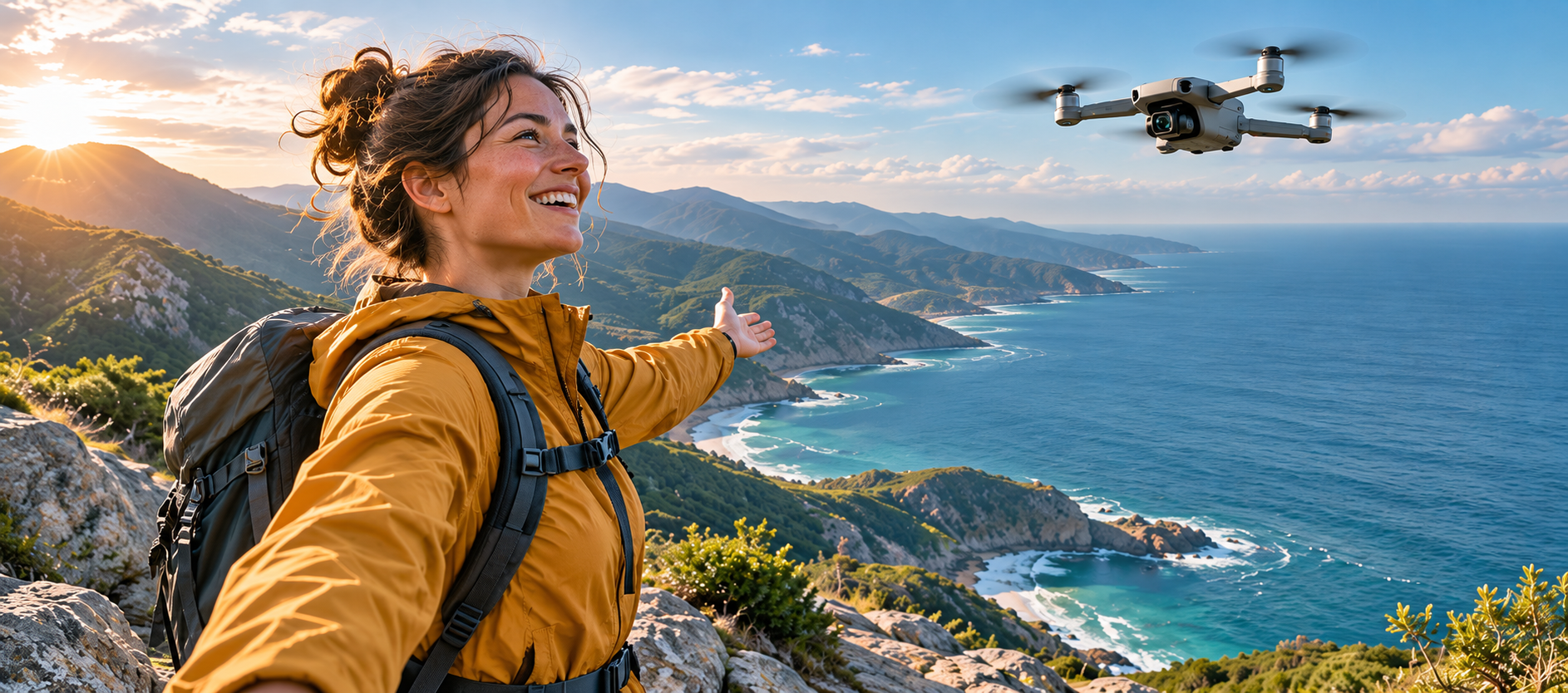
If you mainly want a few seconds of yourself walking into a viewpoint, a compact automatic selfie drone may be the least disruptive option. Preset moves such as pull-away or orbit can cut setup time, and some models support palm launch or phone controls. Check the exact launch, tracking, stop, and landing workflow before relying on it during a trip.
These small designs fit more easily into a day bag, but compact size may come with shorter practical flight time, limited obstacle awareness, and less margin in gusty wind. They are a reasonable starting point for casual travel diaries in clear, permitted spaces, not a reason to leave a drone flying unattended.
Portable Tracking Drones: Following Movement Outdoors
Hiking footage is appealing because the landscape changes naturally behind the subject. It is also demanding: branches, slopes, wind, and shifting light can disrupt tracking. Prioritize a clear way to stop the aircraft, documented wind limits, predictable behavior after a lost target, and obstacle sensing that remains available in the intended flight mode.
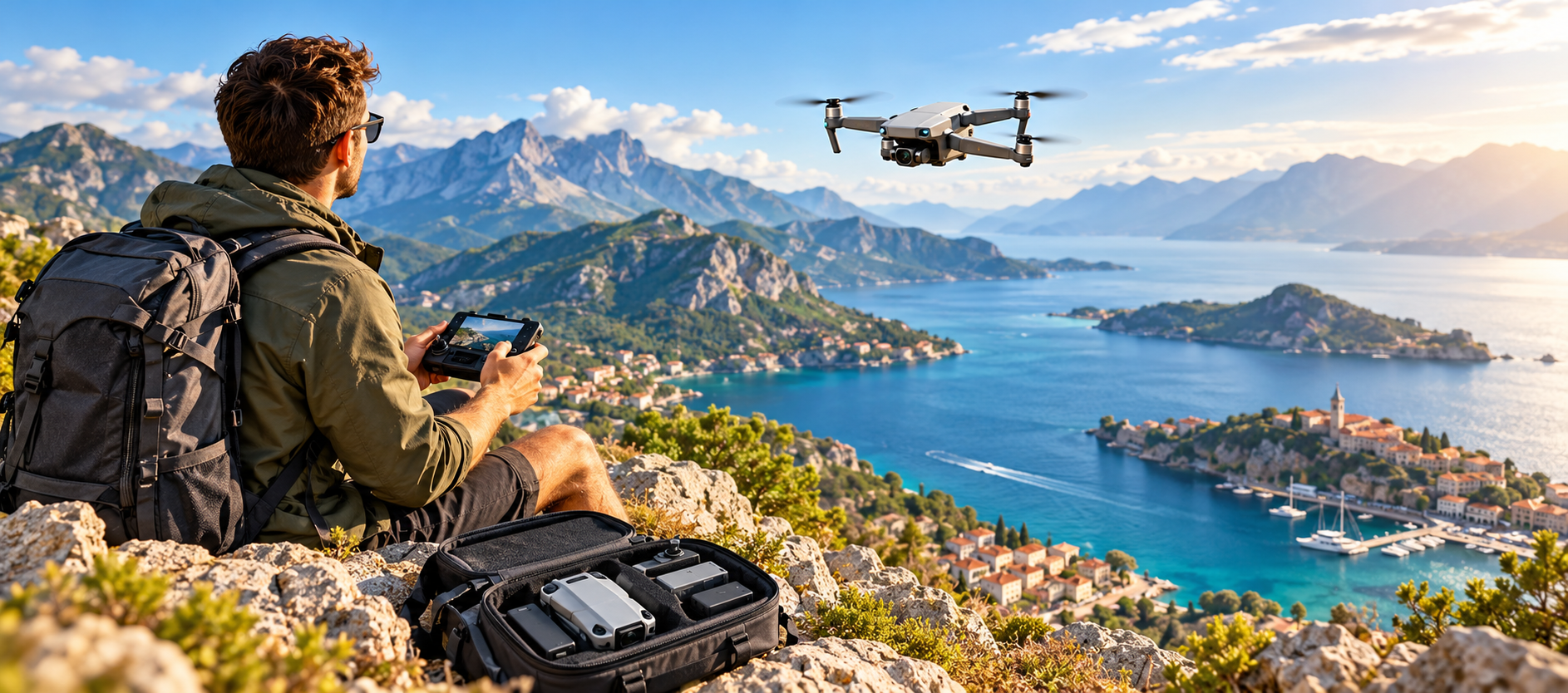
For walks on open trails, the packed kit matters as much as the camera. Check the actual weight of spare batteries, charging gear, controller or wearable, guards, and case; then check whether drones are allowed on the trail. Following mode only helps if you can keep the aircraft in sight and intervene safely.
Conventional Camera Drones: Deliberate Landscape Framing
For scenic reveals, wide establishing shots, and carefully composed landscapes, a stabilized camera drone offers more deliberate creative control. Manual flight and camera adjustments can make a planned composition easier to repeat, while some models provide automated routes or subject modes as optional tools.
That control comes with more work: you must set the shot, position yourself, watch the aircraft, and handle any interruption. If most clips show you walking, this may take longer than using a dedicated follow-me system. It becomes more worthwhile on landscape-focused itineraries where the surroundings, rather than constant self-tracking, drive the composition.
How to Evaluate a Drone for Filming Yourself
Controls You Can Use Without Constant Stick Input
Consider the entire sequence: pairing, takeoff, selecting the subject, adjusting distance, pausing, and landing. Wearables, gesture inputs, phone controls, and preset shots differ by product; none removes the need for active supervision. A reliable, easily accessible stop command matters more than a clever gesture.
Tracking Reliability and Recovery
Tracking performance depends on speed, light, background contrast, and separation. A drone may lose the subject behind a tree or against a visually busy scene. Look for documented behavior after tracking loss, such as braking, hovering, or awaiting input, rather than assuming it will always recover by itself.
Obstacle Awareness and Safe Clearance
Verify sensor direction and whether avoidance remains active during automatic shots. Wires, fine branches, and reflective surfaces can be difficult for sensing systems, and propeller guards do not make collisions harmless. Give each preset path enough clearance, especially for sideways and orbit movements.
Image Quality Versus Reframing Flexibility
Judge the finished clip, not just the resolution label. A stabilized, well-exposed image may be more useful than a high-resolution file that needs heavy cropping. If you plan to publish both horizontal and vertical edits, 360-degree capture helps, but inspect the exported sharpness before choosing it over a conventional camera.
Packing Weight, Setup Time and Travel Restrictions
Estimate the complete travel kit: drone, batteries, charger, storage, controller or wearable, case, and any optional goggles. On hikes or multi-city trips, fast setup and convenient charging can matter more than an extra shooting mode. Check takeoff weight with the accessories you intend to use because some rules depend on the actual configuration.

Battery Life in Real Shooting Conditions
Published flight time is often measured in conditions unlike a windy hillside or a cold morning. Continuous tracking, altitude changes, and temperature can reduce usable endurance. Keep a safe landing reserve and consider whether spare batteries or easy charging will help more than a few additional minutes on paper.
Editing, File Handling and Sharing
Preview the transfer and editing workflow before travel, including available export aspect ratios and storage needs. Reframing 360-degree footage may require more time and processing, while automatic highlights still benefit from human review. A backup routine is just as valuable as a new capture mode on a long trip.
Four Practical Solo-Filming Shots
Walking follow: In an open area where flying is allowed, begin with a steady walk and wide clearance. Review whether the camera keeps a useful distance before attempting a longer shot.
Pull-away reveal: Start with yourself in frame and use a supported retreat or ascent to reveal the scenery. Check the whole flight path and remain able to see the aircraft.
Gentle orbit: Use an orbit only where there is clear space around the entire arc, not merely in front of the drone. Keep the movement easy to monitor and stop.
One flight, three edits: With 360-degree source footage, export a wide landscape view, a side perspective, and a vertical crop. Compare actual detail after reframing instead of assuming every edit retains the full capture resolution.
Safety and Travel Rules You Should Not Skip
Automated filming is still flying. Before launching, check airspace and land-use restrictions, local weather, privacy expectations, and any temporary closures. Some reserves, parks, and busy attractions restrict drone operations even when the sky appears open.
Maintain the visual line of sight, attention, and ability to intervene required by local law. In the United States, confirm current FAA requirements for flight purpose, registration, and Remote ID; overseas rules vary by destination. Check airline policies for transporting lithium batteries before a flight.
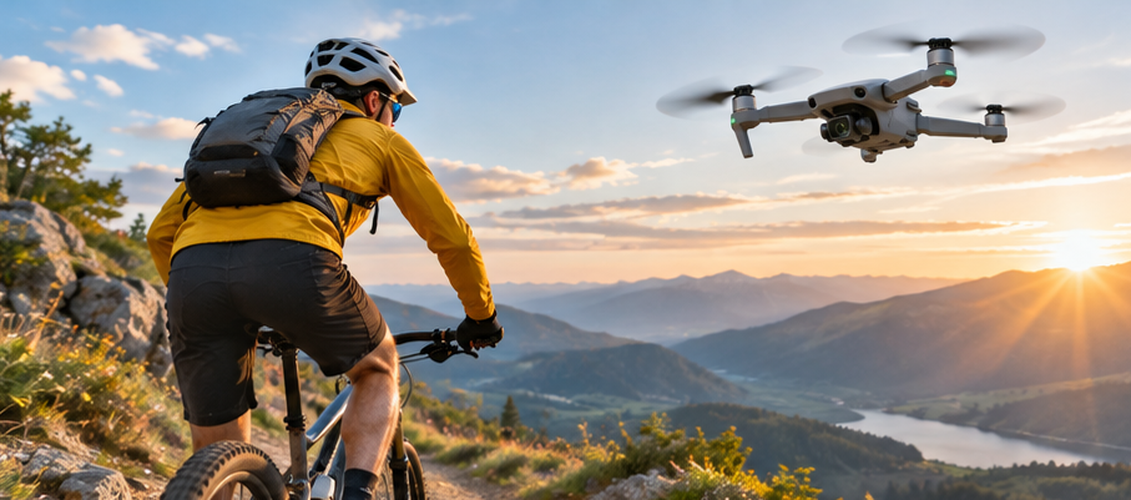
Do not use follow-me filming while driving or during any activity that prevents safe oversight. For cycling or demanding action shots, a separate qualified operator may be more appropriate. Practice in open space, avoid people and wildlife, select a landing area, and keep a battery reserve. If the scene is unsafe, skip the shot.
Final Verdict: Match the Drone to the Shot
For frequent self-filming, start by checking whether tracking is dependable and the controls let you pause or end a flight without confusion. A 360-degree design offers more choices in post-production, while a small automatic selfie drone puts speed and packing simplicity first. For longer hikes, examine wind limits and recovery from tracking loss. A conventional camera drone remains useful when the landscape, not the person being followed, is the central subject. Choose the limitations you can manage safely, not simply the longest feature list.
FAQ
Can a drone film me without a traditional remote controller?
Some models can track a subject using a phone, wearable, or other simplified control, which reduces the need for constant stick input. You still need to supervise the flight and know how to pause, land, or regain control. Hands-free should never mean unattended.
Is a 360-degree drone better for solo travel than a regular 4K drone?
It offers editing flexibility rather than automatically better image quality. With 360-degree footage, you can select vertical and horizontal views later, but each crop uses only part of the recording. A conventional stabilized camera can produce a more direct, simpler file for a planned shot.
Can a follow-me drone track me while hiking or cycling?
Certain tracking modes support walking and, on some drones, faster activities. They cannot guarantee safe obstacle avoidance or uninterrupted subject lock. Check documented limits and local rules, and use a separate operator if the activity would stop you from monitoring or controlling the aircraft.
What accessories should solo travelers bring?
Bring required controls or wearables, charged batteries, a charger, storage media, and a protective case; spare propellers may be useful. Review airline restrictions for lithium batteries, check the complete luggage weight, and back up important files as you travel.
Do I need an expensive drone for cinematic travel footage?
No. Lighting, steady movement, and a clear composition often matter more than headline specifications. Pay more only for tracking, sensing, controls, or reframing capabilities that genuinely match how you plan to film.